• Skip to main content
  • Skip to footer

  • ABOUT
    • Greetings from the Department Chair
    • Department History
    • News
    • Affiliates
    • Support
    • Contact EALAC
  • PEOPLE
    • Faculty
    • Administration
    • Graduate Students
    • Recent Alumni
  • PROGRAMS
    • Undergraduate
    • Graduate
    • Language Programs
    • Academic Year 2025-2026 Courses
  • EVENTS
  • SUPPORT

Faculty-Discipline

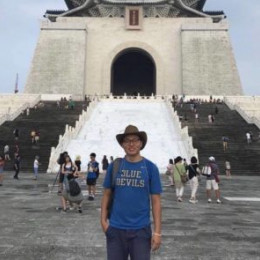
Yifan Zhang

Yifan Zhang

Postdoctoral Research Scholar, Heyman Center for the Humanities
Lecturer, Department of East Asian Languages and Cultures
 

Office: Heyman Center B-204
Office Hours: Wednesdays 2-4 pm (and by appointment)

Email: yz2681@columbia.edu

 
Educational Background
BA: Peking University
MA: Columbia University
PhD: Columbia University
 
Classes Taught
Asian Humanities UN1400: Colloquium on Major Texts
East Asian GU4255: Cities and Everyday Life in Chinese Cultural History
 
Research Interests

Early modern Chinese literature (particularly fiction, drama, and popular literature); urban history; local language, writing, print, and oral media; knowledge and material cultures


Yifan Zhang is a scholar of Chinese literature and cultural history with a focus on the Ming-Qing period (1368-1911). He originally trained in Chinese philology and classical textual scholarship. His interest in the heterogeneity of the Ming-Qing cultural landscape has led him to draw on interdisciplinary methods to engage with both canonical and non-canonical genres, with particular attention to the role of literary practices in world-making.

He is currently preparing a book manuscript based on his dissertation on the entrepreneurial editor Feng Menglong’s (1574-1646) Mountain Songs. This project explores the generative potential of the local Wu language, otherwise marginalized or romanticized, in Feng’s artful reinvention of a racy song genre across media, and in the making of the city of Suzhou as both a material arena and sensuous imagery of fashion in early modern China. By rectifying conventional discourses on the folksong, it offers a new framework for understanding the localized, embodied dynamics of early modern culture-making.

His second book project seeks to probe the interrelation between environmental disorder, literary imagination, and empire-building by focusing on the issue of water in China’s long eighteenth century. His other ongoing projects include the craze for a Suzhou-branded playing-card game in the seventeenth century, and the intertwined aesthetics of Ming-Qing vernacular fiction and the decorative arts of domestic spaces and objects.

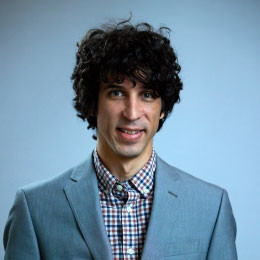
Guoying Gong

Guoying Gong

Postdoctoral Research Scholar, Heyman Center for the Humanities
Lecturer, Department of East Asian Languages and Cultures
 
Office: Heyman Center B204
Office Hours: Tuesdays, 3:00–5:00 pm
Email: gg2711@columbia.edu
 
Educational Background
BA: Peking University
MA: Peking University / University of Colorado at Boulder
PhD: Columbia University
 
Classes Taught
AHUM UN1400: Colloquium on Major Texts: East Asia
 
Research Interests

Guoying Gong is a scholar of premodern Chinese literature whose research focuses on medieval Chinese poetry, classical exegesis, and literary thought and criticism. She is currently revising her dissertation into a book manuscript titled Writing Home and Empire from the Margins: Longing and Belonging in Du Fu’s (712–770) Poetry. This project investigates how poetry both reflected and shaped cultural transformation during the pivotal period following the An Lushan Rebellion (755–763), with a focus on Du Fu’s post-rebellion writings composed during his years in exile.

It argues that Du Fu’s literary experimentation was driven by a sustained negotiation of evolving notions of home and newly imagined visions of empire articulated from the margins. By exploring the intersections of poetry with material, infrastructural, and social realms—including geography, transportation, and the circulation of information—the study demonstrates how encounters with unfamiliar landscapes, compromised infrastructure, and disrupted communication on the empire’s peripheries not only shaped Du Fu’s poetic expression but also expanded the formal and conceptual possibilities of the poetic medium, allowing him to re-envision both home and empire.

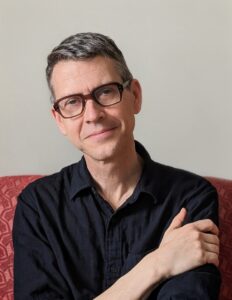
Agnes Hsu-Tang

Agnes Hsu-Tang

Adjunct Senior Research Scholar
Educational Background

BA: Bryn Mawr College
MA: University of Pennsylvania
PhD: University of Pennsylvania (’04)

Dr. Agnes Hsu-Tang is Board Chair of The New York Historical and Co-chair of the Objects Conservation Visiting Committee at the Metropolitan Museum of Art.

Trained as an archaeologist and art historian, Dr. Hsu-Tang served on UNESCO’s (Paris) scientific committees from 2006 to 2013, participated on missions to Uzbekistan, Turkmenistan and China, and authored a white paper on the multi-national UNESCO inscriptions of the Qhapag Ñan (the Incan Road) and the Continental Silk Road (Chang’an to Tianshan Corridor).  From 2013 to 2014, Agnes advised President Obama’s Cultural Property Advisory Committee on the renewal of a bilateral agreement to reduce the illicit trafficking of cultural objects.  Agnes began her training in Classical languages in high school, and studied Classical art and archaeology and English literature at Bryn Mawr College.  After college, Agnes served as a special assistant to the late U.S. Ambassador James R. Lilley, a former envoy to China and Korea.  She also holds a M.A. in East Asian and Middle Eastern Studies from the University of Pennsylvania.

Agnes was a Mellon pre-doctoral fellow in History of Science at the Needham Research Institute at Cambridge University in 2003; she received her Ph.D. from the University of Pennsylvania in 2004.  From 2004 to 2007, Dr. Hsu-Tang was an inaugural Joukowsky fellow in archaeology at Brown University; she was a Mellon scholar in Classics at Stanford University from 2007 to 2008.  She joined Columbia University in 2015 and was appointed Distinguished Consulting Scholar at University of Pennsylvania’s Museum of Archaeology and Anthropology in 2018.

From 2008 to 2015, Dr. Hsu-Tang was involved in several international films on art and archaeology.  She was the bi-lingual host and narrator of two award-winning documentary series: an archaeology series on History Channel Asia (2011-2013), and a contemporary art series on Discovery Channel Asia (2014-2015) that premiered during 2014 Art Basel Hong Kong.  Her prior film credits include “The Giant Buddha at Leshan” (2009) and “Xi’an: China’s Forgotten City” (2010) on Discovery USA, “China’s Terracotta Warriors” on PBS (2011), and Mankind: The Story of All of Us series on History Channel (2012).

Dr. Hsu-Tang has been a director at the Institute of the Study of the Ancient World (ISAW) at New York University since 2013.  She is a co-founder of the Tang Center for Early China at Columbia University (2015), Tang Center for Silk Road Studies at UC Berkeley (2018), and Hsu-Tang Library for Classical Chinese Literature at Oxford University Press (2021).  She is a founding member of the Artist Protection Fund at the Institute of International Education (2014-2022), and served on the boards of the University of Pennsylvania’s Museum of Archaeology and Anthropology (2013-2018) and the Peabody Institute of Archaeology at Phillips Academy Andover (2015-2018).  She chaired Asia Society’s Global Arts Council (2015-2020), and was Executive Chair of Asia Society’s inaugural Triennial of Contemporary Asian Art in 2020.

Dr. Hsu-Tang is a longtime trustee of The New York Historical, and formerly, a managing director on the board of the Metropolitan Opera from 2014 to 2021, at which she chaired its nominating committee from 2018 to 2020 and served on the oversight committee.

Formerly trained as a Classical musician, Agnes made her debut at the Kennedy Center for the Performing Arts in 1989.  She is a recipient of two Mellon fellowships for her academic research, a teaching recognition from Brown University’s Department of History of Art and Architecture, and of the Institute of International Education’s (IIE) Centennial Medal and The Metropolitan Museum of Art’s Women Leaders Award for her work in cultural heritage.

Select Publications

“A Tomb with A View: Axonometry in Early Chinese Cartography” in Designing Boundaries: The Exercise of the Spatial Imagination in Pre-Modern China: Shaping the Expanse (Berlin: De Gruyter, 2022)

“Executive Chair’s Preface” and “Art of Virtue” in exhibition catalog We Do Not Dream Alone (Milan: Skira Editore SpA, 2021)

“Dreaming Together in a Divided World” in exhibition catalog Dreaming Together: New-York Historical Society and Asia Society (New York: New-York Historical Society, 2020)

“Structured Perceptions of Real and Imagined Landscapes in Early Imperial China” in Geography, Ethnography, and Perceptions of the World from Antiquity to the Renaissance (Oxford: Wiley-Blackwell, 2009)

“An Emic Perspective of the Ancient Mapmaker’s Art” in Journal of the Royal Asiatic Society (Cambridge: Cambridge University Press, 2007)

White paper: The Exceptional Universal Value of the Road Systems in Ancient Empires: A Comparative Study of the Chinese Oasis Route of the Early Silk Road and the Qhapag Ñan (Paris: UNESCO, 2006)

  • Go to page 1
  • Go to page 2
  • Go to page 3
  • Interim pages omitted …
  • Go to page 21
  • Go to Next Page »

Before Footer

EALAC – Columbia University
407 Kent Hall 1140 Amsterdam Ave.
MC 3907  New York, NY 10027
tel:212.854.5027

Footer

  • Facebook
  • Instagram
  • Twitter
  • ABOUT
  • PEOPLE
  • PROGRAMS
  • EVENTS
  • SUPPORT

Copyright © 2026 · Columbia University Department of East Asian Languages and Cultures

Copyright © 2026 · EALAC on Genesis Framework · WordPress · Log in