• Skip to main content
  • Skip to footer

  • ABOUT
    • Greetings from the Department Chair
    • Department History
    • News
    • Affiliates
    • Support
    • Contact EALAC
  • PEOPLE
    • Faculty
    • Administration
    • Graduate Students
    • Recent Alumni
  • PROGRAMS
    • Undergraduate
    • Graduate
    • Language Programs
    • Academic Year 2025-2026 Courses
  • EVENTS
  • SUPPORT

core faculty

Madeleine Zelin

Madeleine Zelin

Dean Lung Professor of Chinese Studies,
 History East Asia coordinator

Office: 611 Kent Hall

Phone: (212) 854-2592 [I do not use my phone, please email]Email: mhz1@columbia.edu

Educational Background

BA: Cornell University (’70)
PhD: University of California, Berkeley (’79)

Selected Classes Taught

HSEA GU4891 Law in Chinese HIstory
HSEA GU4880 History of Modern China I
HSEA GU4884 Merchants, Markets and the State
HSEA GR8888 Colloquium on Chinese Legal History
HSEA G8861 Industrial Revolutions

Research Interests

Modern Chinese Legal and Economic History, Comparative History of Law and the Economy
Madeleine Zelin has, since her Ph.D. work at the University of California at Berkeley, taken an
iconoclastic approach to the complex forces shaping modern China. Professor Zelin’s recent
research has focused on legal history, the role of law in the Chinese economy and the interface
between law, culture and the market in early modern China. She has written on state handling
of economic disputes as well as the role of Chambers of Commerce as new sites for economic
mediation. Her chapter on “Economic Freedom in Late Imperial China” (in William Kirby, ed.,
Realms of Freedom in Modern China, Stanford, 2004) challenges the assumption that the
politically autocratic late Ming and Qing imperial regimes were restrictive in their handling of
the private economy. Her latest book, The Merchants of Zigong, Industrial Enterprise in Early
Modern China, is a study of an advanced industrial community in southern Sichuan from the
eighteenth to the early twentieth century and provides new insights into the role of customary
legal and business practices in China’s early modern economic development. It has been
awarded the Fairbank Prize (American Historical Association), Alan Sharlin Memorial Award
(Social Science History Association) and the Humanities Prize of the International Conference on
Asian Studies (ICAS). As part of her commitment to mentoring younger scholars in legal and
economic history of East Asia Professor Zelin serves as co-director of the first AAS New
Directions Workshop: Economic History of Asia and is a founding board member of the
International Society for Chinese Law and History. She is currently completing a book on China’s
earliest company and bankruptcy law reforms at the onset of the twentieth century.

Selected Publications

Merchant Communities in Asia, 1600‐1980 (co-editor, Pickering and Chatto, 2015)

The Merchants of Zigong, Industrial Entrepreneurship in Early Modern China (Columbia, 2005)

The Magistrate’s Tael: Rationalizing Fiscal Reform in Eighteenth Century Ch’ing
China (University of California, 1984)

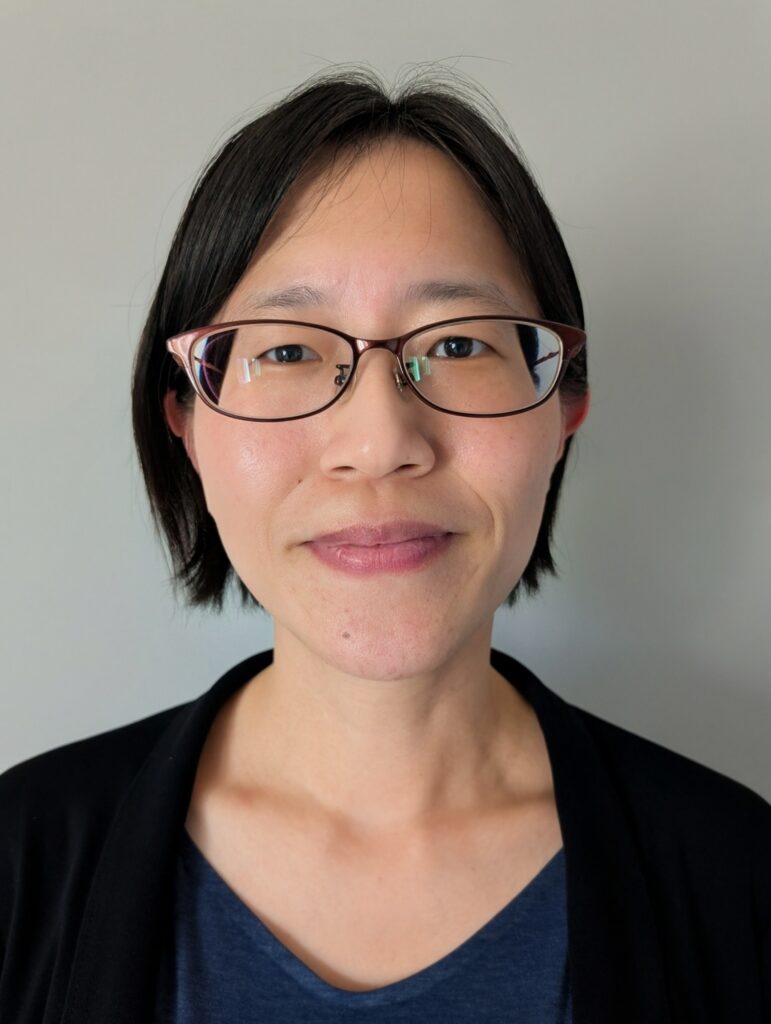
Lili Xia

Lili Xia

Assistant Professor of Premodern Chinese Literature, Barnard College

Office:  317 Milbank Hall, Barnard College
Office Hours: T 4:10–6:00pm & by appointment

Email:  lxia@barnard.edu

Educational Background

BA: Fudan University

MA: Fudan University

PhD: Princeton University

Classes Taught

AHUM UN1400 Colloquium on Major Texts: East Asia

Research Interests

Lili Xia is a scholar of premodern Chinese literature. Her broader research interests include Sino-steppe interactions, cultural memory, print and book culture, intermediality, and digital humanities.

She is now working on her book project titled “North against South in Middle Period China: Classical Poetry and Literati Culture under Jurchen Jin Rule (1115–1234).” By demonstrating a rival narrative of claiming China in the Sino-Jurchen North against the cultural orthodoxy conceptualized in the Han Chinese-ruled South, the book illustrates the burgeoning literati culture under Jurchen rule, and fleshes out the Jin poetic production in particular. While making full use of Jin literary texts, this book is further enriched by art history and material culture, as well as digital tools of social network and geographic analysis to better represent Jin literati culture on the whole. Her research aims to reveal the heterotopia and heteroglossia of China as an intersubjective, transcultural, and border-crossing space in the Middle Period (800–1400 CE).

Before coming to Barnard, she received her B.A. and M.A. in Classical Chinese Literature at Fudan University, and her Ph.D. in East Asian Studies at Princeton University. She was the 2023–24 Louis Frieberg Postdoctoral Fellow in the Department of Asian Studies at the Hebrew University of Jerusalem.

Selected Publications

“Qiuchi as Heterotopia: The Other Space for Su Shi.” Journal of the American Oriental Society 142.1 (2022): 93–119.

Review of Stephen Owen, All Mine! Happiness, Ownership, and Naming in Eleventh-Century China. The Bulletin of the School of Oriental and African Studies 85.2 (2022): 325–27.

“Two Narratives of ‘Grand Peace’ in Northern Song Historiography and Cultural Memory of Song Contemporaries” (北宋仁、徽兩朝的“太平敍事”與宋人文化記憶). Zhonghua wenshi luncong (Journal of Chinese Literature and History) 139 (2020): 219–40. (in Chinese)

Gray Tuttle

Gray Tuttle

Leila Hadley Luce Professor of Modern Tibetan Studies, Chair of the Department of East Asian Languages and Cultures

Office: 401 Kent Hall
Office Hours: By appointment
Phone: (212) 854-4096
Email: gwt2102@columbia.edu

Educational Background

BA: Princeton University (’91)
MA: Harvard University (’96)
PhD: Harvard University (’02)

Classes Taught

ASCE UN1365 Introduction to East Asian Civilizations: Tibet
EARL GU4310 Life Writing in Tibetan Buddhism
HSEA GU4720 20th Century Tibetan History

Research Interests

Tibetan History & Religion

Gray Tuttle studies modern Tibetan history, from the 1600s to the 1950s. The role of Tibetan Buddhism in the history of twentieth century Sino-Tibetan relations as well as Tibet’s relations with the China-based Manchu Qing Empire is central to all his research. In his Tibetan Buddhists in the Making of Modern China (Columbia UP, 2005), he examined the failure of nationalism and race-based ideology to maintain the Tibetan territory of the former Qing empire as integral to the Chinese nation-state. Instead, he argues, a new sense of pan-Asian Buddhism was critical to Chinese efforts to hold onto Tibetan regions (one quarter of China’s current territory). His current research project, “Amdo Tibet, Middle Ground between Lhasa and Beijing (1578-1865),” is a historical analysis of the economic and cultural relations between China and Tibet in the early modern periods (16th – 19th centuries) when the intellectual and economic centers of Tibet shifted to the east, to Amdo — a Tibetan cultural region the size of France in northwestern China. Deploying Richard White’s concept of the “Middle Ground” in the context of two mature civilizations — Tibetan and Chinese — encountering one another, this book will examine how this contact led to three dramatic areas of growth that defined early modern Tibet: 1) the advent of mass monastic education, 2) the bureaucratization of reincarnate lamas’ charisma and 3) the development of modern conceptions of geography that reshaped the way Tibet was imagined. Recently he has turned to increasingly large data sets in an effort to ask and answer new questions about Tibetan history. In an effort to ask and answer new questions about Tibetan history, Gray has turned to increasingly large data sets over the course of his career. Starting with a database of over 1000 Amdo monasteries with dozens of fields of data (GIS location, foundation data, number of monks, rooms, livestock, etc), led to building datasets on 100s of incarnation series and monastic colleges as well, which have shaped the direction of the Amdo history book project in significant ways. Lately, with a research assistant, Gray has worked with larger datasets and the statistical computing and graphing programming language called “R” to examine existing data on Tibetan (mostly monk’s) longevity in comparison with Chinese monks, Chinese literati, and Europeans in history. Future plans include working with even larger datasets by examining the hydrology of the Tibetan plateau with climate scientists, to see if new perspectives of the large arcs of Tibetan history might be reframed by a deeper understanding of climate data.

Selected Publications

With Lan Wu. “Tibetan Buddhist Vanguards among the Mongols and Manchus, 1576-1638.” Revue d’Etudes Tibétaines, (October 2021).

“Pattern Recognition: Tracking the Spread of the Incarnation Institution through Time and across Tibetan Territory.” Revue d’Etudes Tibétaines. 38 (February 2017)

Ethnic Conflict and Protest in Tibet and Xinjiang: Unrest in China’s West. Co-edited with Ben Hillman. New York: Columbia University Press, 2016.

Sources of Tibetan Tradition (co-editor, Columbia, 2013)

The Tibetan History Reader (co-editor, Columbia, 2013)

Tibetan Buddhists in the Making of Modern China (Columbia, 2005)

  • Go to page 1
  • Go to page 2
  • Go to page 3
  • Interim pages omitted …
  • Go to page 9
  • Go to Next Page »

Before Footer

EALAC – Columbia University
407 Kent Hall 1140 Amsterdam Ave.
MC 3907  New York, NY 10027
tel:212.854.5027

Footer

  • Facebook
  • Instagram
  • Twitter
  • ABOUT
  • PEOPLE
  • PROGRAMS
  • EVENTS
  • SUPPORT

Copyright © 2026 · Columbia University Department of East Asian Languages and Cultures

Copyright © 2026 · EALAC on Genesis Framework · WordPress · Log in