• Skip to main content
  • Skip to primary sidebar
  • Skip to footer

  • ABOUT
    • Greetings from the Department Chair
    • Department History
    • News
    • Affiliates
    • Support
    • Contact EALAC
  • PEOPLE
    • Faculty
    • Administration
    • Graduate Students
    • Recent Alumni
  • PROGRAMS
    • Undergraduate
    • Graduate
    • Language Programs
    • Academic Year 2025-2026 Courses
  • EVENTS
  • SUPPORT

admin

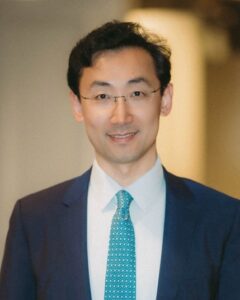
Zhongqi Shi

Zhongqi Shi

Senior Lecturer in Chinese

Office: 626 Kent Hall
Office Hours: MTR 9:55-10:10 AM, 11:30-12:00 PM or by appointment
Phone: 212-854-0660
Email: zs2132@columbia.edu

Educational Background

PhD: Cognitive Science in Education, Teachers College, Columbia University
MA: Applied Linguistics, Beijing Language and Culture University
BA: Teaching Chinese as a Foreign Language, Beijing Language and Culture University

Classes Taught

CHNS GU4012 Business Chinese I
CHNS GU4013 Business Chinese II
CHNS GU4112 Advanced Business Chinese I
CHNS GU4113 Advanced Business Chinese II
CHNS UN3003 Third Year Chinese I
CHNS UN3004 Third Year Chinese II
CHNS UN2205 Second Year Chinese I

Research Interests

AI and Technology-Enhanced Language Learning
Chinese for Professional and Specific Purposes
Second Language Motivation and Teacher–Student Relationships
Corpus-Based Research and L2 Language Development
Curriculum Design and Experiential Learning


Zhongqi Shi is Senior Lecturer in Chinese in the Department of East Asian Languages and Cultures at Columbia University, where he has taught since 2005. He previously served as Associate Director of the Chinese Program and Coordinator of East Asian Language Programs.

His teaching and research focus on Chinese for professional and specific purposes, AI- and technology-enhanced language learning, second language motivation, and curriculum and program development. He has received multiple Provost’s Teaching and Learning Grants for pedagogical innovation at Columbia, supporting projects that have explored podcasting, video-based reflection, AI-assisted job interview preparation, and AI-powered conversational learning. His work on an AI-assisted chatbot for Business Chinese was featured by Columbia’s Center for Teaching and Learning in its “Faculty Voices on AI in the Classroom” series and as a Faculty AI Use Case on Columbia Magazine.

His publications address Business Chinese, second language motivation and development, and technology-enhanced language learning. His recent book, Embracing Change: A New Era in Chinese Teaching (《应变:中文教学新思路》), was published by Cheng & Tsui in 2026.

Shi has held a number of leadership roles in the Chinese Language Teachers Association (CLTA-US), including President and Vice President, as well as chairing the ACTFL–CLTA Conference Program, the AI for Chinese Special Task Force, and the Media and Publicity Committee.

Selected Publications

Books on Chinese Language Teaching and Pedagogy

Shi, Z. (2026). 《应变:中文教学新思路》 Embracing Change: A New Era in Chinese Teaching. Boston, MA: Cheng & Tsui Co., Inc. ISBN 978-1-62291-770-9.

Shi, Z., & Qiu, Z. (2009). 《中文可以这样教》 Teach Chinese This Way. Beijing: QunYan Press. ISBN 978-7-8025-6051-2.

Selected Journal Articles and Book Chapters

Guan, D., & Shi, Z. (2026). Business Chinese Curriculum Development: An Analysis of Course Types and Pedagogical Approaches. In L. Y. Chen & C. M. Tu (Eds.), New Developments in Chinese for Specific and Professional Purposes.

Shi, Z., Tian, Y., & Liu, R. (2025). 美国高校中文教师的岗位特点与职业素养—基于招聘启事的分析和研究 [Characteristics and Professional Competencies of Chinese Language Instructors in U.S. Higher Education: An Analysis of Job Postings]. Journal of Language Governance, 3, 85–98.

Shi, Z., Du, Y., & Yu, W. (2025). Podcasting and L2 Listening: Impacts on Behavior and Attitude in Chinese Language Learners. Journal of Technology and Chinese Language Teaching, 16(1), 118–144.

Shi, Z., & Li, S. (2024). From Mock Interviews to Real Job Interviews: Assessing the Efficacy of Business Chinese Instruction. Foreign Language Annals, 1–20.

Shi, Z., & Yuan, Q. (2023). Machine Learning-Based Investigation of Syntactic Complexity Measures in Foreign Language Acquisition. Chinese as a Second Language, 58(3), 262–298.

Shi, Z., & Guan, D. (2022). 基于三维调查的商务汉语核心教学内容探讨 [An Investigation of Core Content of Business Chinese Instruction: A Three-Dimensional Perspective]. International Journal of Chinese Language Teaching, 3(1), 36–56.

Shi, Z. (2021). 专用汉语教学需求分析:从理论到实践 [Needs Analysis in Teaching Chinese for Special Purposes: From Theory to Practice]. Chinese Language Teaching Methodology and Technology, 3(2), 84–94.

Shi, Z., Yuan, Q., & Guan, D. (2019). 1997–2017年商务汉语教学探索与实践: 热点与反思 [1997–2017 Business Chinese Teaching and Research Overview]. International Chinese Language Education国际汉语教育, 4(4), 6–19.

Selected Textbooks

Winning Strategies (V1): Learning Business Chinese through Real Companies 《商务中文案例教程—策略卷》. China Translation & Publishing Corporation, 2015. Editor-in-Chief/First Author.

Winning Strategies (V2): Learning Business Chinese through Cross-Cultural Cases 《商务中文案例教程—文化卷》. China Translation & Publishing Corporation, 2015. Editor-in-Chief/Co-author.

Understanding China: Advanced Chinese Reader 《理解中国—高级汉语教程》. Peking University Press, 2014. First Author.

Excellent Chinese: Business Practice 《卓越汉语—公司实战篇》. Foreign Language Teaching and Research Press, 2010. First Author.

Wei Shang

Wei Shang

Du Family Professor of Chinese Culture

Office: 404 Kent Hall
Office Hours: TBD
Phone: (212) 854-1526
Email: ws110@columbia.edu

Educational Background

BA: Peking University (’82)
MA: Peking University (’84)
PhD: Harvard University (’95)

Classes Taught

AHUM UN1400 Colloquium on Major Texts: East Asia
CHNS GU4507 Readings in Classical Chinese
EAAS GR8030 Pre-Modern Chinese Fiction

Research Interests

Pre-modern Chinese Literature, Cultural and Intellectual History with special attention to Fiction and Drama of the Ming and Qing dynasties (1368-1911).

Professor Wei Shang specializes in pre-modern Chinese literature and culture, especially the fiction and drama of the Ming and Qing dynasties. His research interests also include print culture, book history and intellectual history of the same period. His book “Rulin Waishi” and Cultural Transformation in Late Imperial China (2003) addresses the role of Confucian ritualism and fiction in shaping the intellectual and cultural changes of the eighteenth century. His other publications are concerned with Jin Ping Mei Cihua (The Plum in the Golden Vase), late Ming culture, fiction commentary, and medieval poetry, including Writing on Landmarks: From Yellow Crane Tower to Phoenix Pavilion (2020). He is the editor and co-editor of several volumes in both English and Chinese, and a contributor to The Cambridge History of Chinese Literature (2010).

Selected Publications

Books:

江山勝跡:人文風景的建構與傳承 Cultural Landscape: Its Construction and Transformation, co-edited with Xiao Han. Beijing University Press, 2025, 299 pages.

Rulin Waishi and Cultural Transformation in Late Imperial China. Harvard University Asian Center, 2003.

Writing on Landmarks: From Yellow Crane Tower to Phoenix Pavilion (Tixie mingsheng: cong huanghe lou dao fenghuang tai). Beijing: Sanlian Publishing House, 2020.

Old-Style Prose: An Annotated Anthology for Young Readers (Gei haizi de guwen). Beijing: Moveable Type, 2019.

Dynastic Crisis and Cultural Innovation: From the Late Ming to the Late Qing and Beyond (co-edited with David Der-wei Wang). Harvard University Asian Center, 2005.

A special issue of Journal of Chinese Literature and Culture: Literature and Visual Culture in Early Modern China (co-edited with Xingpei Yuan), Duke University Press, 2015.

Articles:

 “Theatrical Performance and Spectatorship in Dramatic Sanqu Writings Modeled on Zaban: From “The Country Pumpkin Knows Naught of the Theater” to “Gaozu Returns to His Hometown”, in Literature & Art Studies 文藝研究, 2025 (5): 5-37.

“Reflecting on the May-Fourth ‘Vernacularization Movement’: Discourse, Practice, and Historical Significance.” 國際漢學研究通訊 Newsletter for International China Studies, 2024 (28): 3-99.

“A Place Made Well Known by a Poem: Ji (跡)and Wen (文)in Landscape Poetry.” The Journal of Peking University, 2023 (5): 99-112.

“The Emergence of the Novel: From Outlaws of the Marsh to The Plum in the Golden Vase.” Approaches to Teaching The Plum in the Golden Vase (ed., Andrew Schonebaum). Modern Language Association of America, New York, 2022, pp. 310-327.

“Para-text and Narrative Time of Rulin Waishi.” Wenxue yichan 文學遺產 (Literary Heritage), 2021 (6): 4-16.

“On Rulin Waishi‘s Original Edition and Other Related Issues.” Gudian wenxue qianyan yu pinglun 古典文學前沿與評論 (Frontiers and Review of the Classical Chinese Literary Study), 2021 (2): 199-220.

A review article: “Toward a Theory of Traditional Chinese Theater and Performance Arts: A Review of A Remarkable Game: What is so Great about Peking Opera.” Wenyi yanjiu 文藝研究 (Literature and Art Studies), 2022 (4): 151-164.

“Fictional Performances: Royal Birthday Ceremonies and the Self-Imagination of the Empire in Yesou puyan”. Literary Heritage (Wenxue yichan), no. 3, 2017: 155-167.

“The Formation of a Poly-textual Novel:  From The Water Margin to The Plum in the Golden Vase”. The Journal of Fudan University, no. 5, 2016: 31-58.

“A Lively Illusion: Occidental Lens, Linear Perspective, and the Phantom of the Grand Prospect Garden” (I, II, III). Studies of Cao Xueqin (Cao Xueqin yanjiu), no. 1, 2, 3, 2016: 95-117 (I); 103-123 (II); 38-62 (III).

“Truth Becomes Fiction When Fiction is True: The Story of the Stone and the Visual Culture of the Manchu Court”.  A special issue of Journal of Chinese Literature and Culture: Literature and Visual Culture in Early Modern China, October 2015: 207-248.

“Writing and Speech: Rethinking the Issue of Vernaculars in Early Modern China”, Rethinking East Asian Languages, Vernaculars, and Literacies, 1000-1919 (edited by Benjamin Elman). Brill: Leiden/Boston, 2014: 254-301.

Filed Under: Emeritus

Barbara Ruch

ruch

Barbara Ruch

PROFESSOR EMERITA

School: School of the Arts
Office: 407 Kent Hall
Email: bruch@columbia.edu
Phone: 212-854-7403

Educational Background

MA: University of Pennsylvania (’60)
PhD: Columbia University (’65)

Research Interests

Ancient, Medieval and Early Modern Japanese Literary and Cultural History, Illuminated Literary Texts, Japanese Heritage Musical Instruments and Vocal Literature

Professor Emerita, Barbara Ruch, is full-time Director of the IMJS: Institute for Japanese Cultural Heritage Initiatives and was the Founder and first Director of EALAC’s Donald Keene Center of Japanese Culture and the Shincho Professorship of Japanese Literature for Donald Keene and successors which she conceptualized and for which she raised the endowment during 1984-1986 with support in Japan of eminent writers and cultural leaders, Shiba Ryōtarō, Abe Kōbō, Nagai Michio, Takemitsu Tōru and the then president Satō Ryōichi and general manager Nitta Hiroshi of Shinchosha Publishing Co.

Professor Ruch received her M.A. in classical Chinese and Japanese Studies at the University of Pennsylvania under Derk Bodde and Dale Saunders and her Ph.D. at Columbia in Medieval Japanese Literature and Cultural History under Tsunoda Ryūsaku, Donald Keene and Ivan Morris. Her training at Kyoto University had been with the linguist Sakakura Atsuyoshi, the historian Hayashiya Tatsusaburō, and the medieval fiction specialist Okami Masao. She then taught Classical and Modern Japanese language and Japanese literature at Harvard, then at Penn, and also, commuting to New York, she shared the teaching of Pre-Modern and Modern Japanese Literature with Professor Keene as Visiting Professor at Columbia for several years. She moved permanently to Columbia as Professor in 1984, at which time she brought to Columbia under the EALAC umbrella the Institute for Medieval Japanese Studies (IMJS) which she had founded at Penn in 1968, and which had a name change in 2013 to IMJS: Institute for Japanese Cultural Heritage Initiatives. At Columbia, in addition to her seminar on medieval vocal narratives, she instituted EALAC’s first courses specializing in Major Women Writers in Pre-Modern and Modern Japan as well as the History of Female Clerics in Japanese Buddhism. Professor Ruch retired from teaching and became Emerita in 1999, but has remained full-time director of the Institute to the present day.

The mission of the Institute has been, and remains, the identification, resurrection and research of sorely neglected constituents, often unrecognized as academic fields, that are fundamental to the understanding of Japanese culture. The first decades of its research were devoted to the first full-scale collaborative study of the huge body of neglected medieval Japanese illuminated fictional texts (Nara ehon, otogizōshi) and to opening the field of the performing art based on calligraphed paintings known as etoki. In 1978-79 Professor Ruch directed the first international and interdisciplinary research team of scholars of literature, art, and religion in on-site collections of such texts discovered in London, Dublin, New York, Tokyo and Kyoto, that had till then been unknown to scholars in Japan. The works were published in full in the 1980s. She was awarded the newly established Minakata Kumagusu Prize in 1991. During the decade of the 1990s she then led research projects that resulted in the resurrection of the history of eminent Japanese women clerics and publications on the thirteen extant Imperial Buddhist Convents in Nara and Kyoto which culminated in permanent on-going projects of research and restoration (architecture; textiles; hand-calligraphed records, etc.), and the establishment of a sister collaborating office in Kyoto. Following exhibitions and symposia at Columbia and in Tokyo she edited the first English-language book on the subject (Engendering Faith: Women and Buddhism in Premodern Japan). In 1992 she was the first non-Japanese to receive the Aoyama Nao Prize for Women’s History. In 1999 she received the Order of the Precious Crown, with Butterfly crest, an imperial decoration for eminent royal and other women founded by the Meiji Empress. In 2000 she was awarded the Yamagata Bantō Prize, given yearly to one Japan specialist worldwide for leadership and creativity in the study of Japan. In 2008 she was the first foreign woman to receive the Bukkyō Dendō Kyōkai (BDK) Cultural Award in furthering the history of Buddhism, and in 2009 the previous decades of research and collaboration with the Imperial Convents culminated in the Tokyo exhibition focused on all thirteen convents and with the appearance of the bilingual Amamonzeki: Hidden Heritage – Treasures of Imperial Buddhist Convents. In 2011 she received the Kyoto Cultural Award from the Governor of Kyoto. Prof. Ruch signed an agreement with Columbia’s Graduate School of Architecture, Planning, and Preservation (GSAPP) and the Nara National Research Institute for Cultural Properties (Nabunken), with IMJS as liaison in 2011 for a five-year multi-dimensional project focused on East-West issues of conservation and historic preservation and an exchange of related faculty lecturers to Columbia and Columbia student interns to Japan.

Columbia celebrated its 250th anniversary in 2004, Juilliard School of Music marked its 100th anniversary in 2005 and Columbia’s eminent Department of Music was about to celebrate its 110th anniversary in 2006 – a time of re-evaluation of direction in Japanese Studies. An Institute survey of American academia revealed that the only discipline of Japanese Studies that has no degree program or center in the U.S. was the huge and culturally influential field of Japanese heritage music. Concerned with the neglect of Japanese instrumental heritage music in both academia as well as in music training programs in and outside Japan, Professor Ruch turned to the Japanese Agency for Cultural Affairs and in collaboration with the Columbia Department of Music launched a program in 2006-2007 to teach Japanese Classical Gagaku Court Music and form a Gagaku Instrumental Ensemble within the Music Performance Program and the Columbia and Juilliard joint program. In 2007 the Mentor/Protégé Program was created for intensive training in Tokyo for the most talented musicians emerging from the Gagaku training program, and in 2011 Edo-period shakuhachi and koto ensembles were added to the performance program. March 2020 marks the 15th anniversary of this Japanese ensemble initiative, which includes course credit, instrumental training, workshops for composers, the summer six-week Mentor/Protégé Program, annual NY master classes, and Miller Theatre concerts. Expanded collaboration with Columbia’s Computer Music Center (CMC) and the School of the Arts Sound Arts Program (SAP) has opened new doors for young Japanese and American musicians and composers to explore the sonics of Japanese heritage instruments, the first project of which was a computer analysis of various types of koto instruments in a collaboration between the Columbia CMC and the Tokyo University of the Arts, published in the August 2015 issue of the Hōgaku Journal.

In 2013 Prof. Ruch organized the first New York Summit on preserving the past, enriching the present, and engaging the future of Japanese Heritage Music. It was at this time the Institute – no longer and not for a long time focused exclusively on the medieval age of Ashikaga Yoshimitsu – changed its working name (by request of collaborating scholars) to the IMJS: Institute for Japanese Cultural Heritage Initiatives. The subsequent Tokyo Summit of Japanese Heritage Music in June 2014, enlarged by four strategy teams during 2014, continues work today in broadening music teacher training beyond Western instruments to include Japanese instrumental training as well.

During the academic year 2018-2019 the Institute marked the 50th anniversary of its founding with concerts in New York and at Yomiuri Ōtemachi Hall, Tokyo, featuring advanced Gagaku musicians from Columbia; commissioned stage interpretations of the medieval picture scroll Kiku no sei monogatari (Chrysanthemum Heart) by  Japanese musicians; and, with newly composed music, and vocalizations of the 12th-century lyrics of imayō songs by the celebrity singer Otomae that miraculously had been transcribed live by Retired Emperor GoShirakawa who had been her student.

06/21/2016 by admin

  • « Go to Previous Page
  • Go to page 1
  • Interim pages omitted …
  • Go to page 40
  • Go to page 41
  • Go to page 42
  • Go to page 43
  • Go to page 44
  • Interim pages omitted …
  • Go to page 60
  • Go to Next Page »

Primary Sidebar

Before Footer

EALAC – Columbia University
407 Kent Hall 1140 Amsterdam Ave.
MC 3907  New York, NY 10027
tel:212.854.5027

Footer

  • Facebook
  • Instagram
  • Twitter
  • ABOUT
  • PEOPLE
  • PROGRAMS
  • EVENTS
  • SUPPORT

Copyright © 2026 · Columbia University Department of East Asian Languages and Cultures

Copyright © 2026 · EALAC on Genesis Framework · WordPress · Log in