Hongyi Yu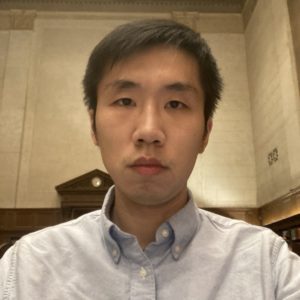
Field: Modern Chinese History
Advisor: Eugenia Lean
Email:hy2658@columbia.edu
Hongyi is a Ph.D. candidate in the History-East Asia program, specializing in the social and cultural history of twentieth-century China. His research interests revolve around issues relating to propaganda, censorship, print culture, and the history of books in the contexts of modern China and East Asia. His dissertation foregrounds the centrality of Communist grassroots propaganda personnel in the Chinese Communist Party’s road to power—charting how the Party relied on this heterogenous group of individuals to expand its local organizations during the Second Sino-Japanese War and consolidate power in the early years of the People’s Republic. Extending the historical definition of “propaganda,” his research highlights, in addition to mass media and artistic ephemera, the interplay between grassroots propaganda personnel and their audiences as the backdrop against which effective propaganda played out. Ultimately, he seeks to adopt a comprehensive approach to propaganda, illuminating the political organization, sociocultural landscapes, and material conditions underlying the mundane work performed by propaganda personnel in the course of China’s Communist revolution and socialist construction. Besides the dissertation research, Hongyi is also interested in exploring how to situate the Chinese Communist revolution in an international and global context for pedagogical purposes. Courses he plans to design and teach include Communism in East Asia and the People’s Republic as History.
Before coming to Columbia, Hongyi received his BA in history and MA in East Asian Studies from UCLA in 2020.