• Skip to main content
  • Skip to footer

  • ABOUT
    • Greetings from the Department Chair
    • Department History
    • News
    • Affiliates
    • Support
    • Contact EALAC
  • PEOPLE
    • Faculty
    • Administration
    • Graduate Students
    • Recent Alumni
  • PROGRAMS
    • Undergraduate
    • Graduate
    • Language Programs
    • Academic Year 2025-2026 Courses
  • EVENTS
  • SUPPORT

current-phd-students

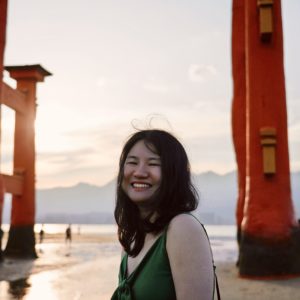
Xiaoke Yang

Xiaoke Yang

Field: East Asian Religion
Advisor: Michael Como
Email: xy2504@columbia.edu

Xiaoke Yang is a Ph.D. student in medieval Japanese Religion and Material Culture. Her research interests center on the materiality of religious objects that facilitate relations between humans, objects, and deities. She focuses on how religious objects generate and empower living networks that translate tangible materials into intangible religious and socio-political benefits. She is also interested in how religious objects described in literary works like folktales, myths, and performative texts serve similar functions as actual offerings in cultic belief construction.

Xiaoke received her BA in East Asian Studies from New York University (2020), and MA in Japanese Religion from Columbia University (2023).

01/29/2020 by Nicole Roldan

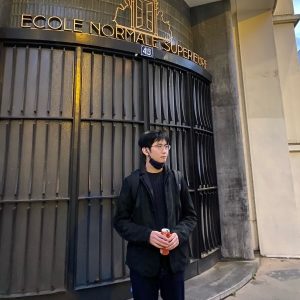
Hekang Yang

Hekang Yang

Field: Chinese History
Advisor: Madeleine Zelin
Email: hy2614@columbia.edu

Hekang Yang is an advanced Ph.D. candidate in Chinese history at Columbia University, where he works with Professor Madeleine Zelin. His research focuses on late imperial and modern China in global context, with particular interests in political economy, frontier governance and statecraft, legal-economic institutions, transnational trade, and Qing–Russian relations in the 19th and 20th centuries. He is also affiliated with Columbia’s Harriman Institute and Center for Political Economy. His dissertation project, Reinventing Frontier Commerce: China, Russia, and the World Economy, 1805–1911, is supported by fellowships from the Economic History Association, the Tokyo Foundation for Policy Research, the Massachusetts Historical Society, and the Weatherhead and Harriman Institutes, among others. Based on extensive archival research in China, Russia, and Japan, this study examines how a historically rooted overland trade in Inner Asia adapted to the emergence of a nineteenth-century industrial, extraction-driven global economy. Late imperial China maintained two principal entrepôts for international trade: Canton and Kiakhta.

Hekang’s dissertation focuses on the less-examined northern frontier trading regime, analyzing the business practices of Kiakhta merchants, its position within and interaction with the Canton system and the global economy, and its institutional transposition and expansion into Central Asia, Chinese treaty ports, and the Russian Far East over the long nineteenth century. The dissertation conceptualizes the frontier trade regime as a shared arena of empire-making between Qing China and Tsarist Russia. Hekang argues that rather than being peripheral or self-contained, frontier commerce functioned as an integrated system of imperial governance, through which commodity exchange, diplomacy, tax policy, and diaspora institutions collectively shaped modern China’s economic and geopolitical statecraft, law and extraterritorial jurisdiction, as well as nationalism and sovereignty.

01/29/2020 by Nicole Roldan

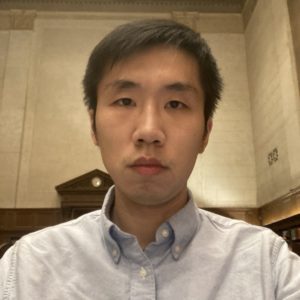
Chuan Xu

Chuan Xu

Field: Modern Chinese History
Advisor: Eugenia Lean
Email: cx2193@columbia.edu

Chuan Xu is a doctoral student of modern China interested in governmentality studies, media archaeology, critical theory, and history of science and technology.

His previous project, titled From Sonic Models to Sonic Hooligans, examines the role of magnetic tape in the rise and fall of Maoist China’s sound regime. His current project studies the shifting epistemic practices in the early post-Mao period through the lens of paranormal research, a decade-long mass movement in which everyone from prominent scientists to illiterate peasants conducted experiments and observations to corroborate and contest the existence of human superpower. Through this project, he seeks to illustrate how the emergence of post-Mao China was as much an epistemic event as an economic, political, and cultural event. In another project, tentatively titled Math for the Masses, Chuan studies the development and application of operations method (tongchoufa) and optimization method (youxuanfa) in the context of Maoist China. He has also written on the intellectual impact of cybernetics in United States and China, particularly with regard to the development of Graphical User Interface and the rise of economic cybernetics.

Before coming to Columbia, Chuan received his B.A. and M.A. in History at Stanford University, where he also developed an interest in computer programming. In his spare time, he enjoys going to remote corners of the globe with broad horizons and starry skies.

01/26/2020 by admin

  • « Go to Previous Page
  • Go to page 1
  • Interim pages omitted …
  • Go to page 4
  • Go to page 5
  • Go to page 6
  • Go to page 7
  • Go to page 8
  • Interim pages omitted …
  • Go to page 18
  • Go to Next Page »

Before Footer

EALAC – Columbia University
407 Kent Hall 1140 Amsterdam Ave.
MC 3907  New York, NY 10027
tel:212.854.5027

Footer

  • Facebook
  • Instagram
  • Twitter
  • ABOUT
  • PEOPLE
  • PROGRAMS
  • EVENTS
  • SUPPORT

Copyright © 2026 · Columbia University Department of East Asian Languages and Cultures

Copyright © 2026 · EALAC on Genesis Framework · WordPress · Log in