• Skip to main content
  • Skip to footer

  • ABOUT
    • Greetings from the Department Chair
    • Department History
    • News
    • Affiliates
    • Support
    • Contact EALAC
  • PEOPLE
    • Faculty
    • Administration
    • Graduate Students
    • Recent Alumni
  • PROGRAMS
    • Undergraduate
    • Graduate
    • Language Programs
    • Academic Year 2025-2026 Courses
  • EVENTS
  • SUPPORT

China

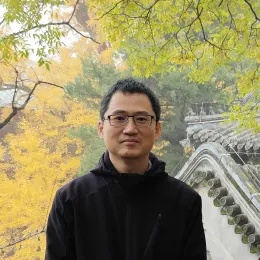
Jin Xu

Jin Xu

Jane and Leopold Swergold Associate Professor of Chinese Art History
Education

PhD: The University of Chicago, 2017

Research Interests

Art and Architecture in China

Biography

Jin Xu specializes in pre-modern Chinese art history, with particular interest in art and architecture during the imperial period (221 BCE–1911 CE). His research focuses on the artistic expressions of migrants and their communities, including both non-Chinese immigrants in China and Chinese emigrants in border regions. He seeks to understand how the experience of migration shaped perceptions of art and how art, in turn, helped individuals make sense of their migratory lives and heritage. In his work, he also emphasizes the significance of material properties and technical processes in informing ways of seeing.

Over the years, he has studied stone coffins and funerary couches from the Northern Dynasties (386–581), a period that witnessed an influx of Central Asian immigrants, notably the Iranian-speaking Sogdians from present-day Uzbekistan and Tajikistan. His first book, The Silk Road with Many Faces: Sogdian Immigrants in Early Medieval China (forthcoming, Oxford University Press), demonstrates the various ways—material, pictorial, and architectural—in which Sogdian immigrant leaders and their families expressed their multifaceted life experiences through stone burial furniture.

He is currently completing a book on figural representations from the Northern Wei (386–534), the first major dynasty in Chinese history founded by nomadic immigrants. This project examines a variety of artistic media commissioned by people from diverse ethnic and cultural backgrounds. It addresses key issues in Chinese art history, such as images of the deceased, the roles of women as patrons and viewers, and interactions between Buddhist and indigenous Chinese artistic practices. He is also working on papers about the art and architecture associated with immigrants during the reign of the Qianlong emperor (1711–1799) of the Qing dynasty (1644–1911).

His teaching covers a wide range of topics, including inter-regional artistic exchanges within East Asia, religious and funerary art, the art of the Silk Road, artistic materials and techniques, objects study, images and texts, rubbings and prints, and architecture and gardens. Before joining Columbia, he taught in the Art Department at Vassar College.

Prospective PhD applicants are welcome to reach out and share their application materials. However, due to the high volume of inquiries, I may not be able to respond to every email, especially if your research interests do not closely match mine.

Selected Publications

“Prayer Hall Under the Imperial Gaze: The Qianlong Emperor (1711-99) and the Huiziying Mosque,” Journal of the Society of Architectural Historians, 85.3 (2026) [Forthcoming].

“A Central Asian Steed with a Chinese Spirit: Han Gan’s Night-Shining White and the Transformation of Horse Paintings in Eighth-Century China,” Orientations, no.3 (2026) [Forthcoming].

“Love, Luxury, and Live Spectacle: Narrative Paintings and Women’s Patronage under the Northern Wei,” The Art Bulletin, no. 3 (2024) : 91-116.

“Evoking the Past: The Ning Mao Sarcophagus and Images of the Deceased in Early Medieval China,” Early Medieval China (2024).

“Monsters on an Imperial Stone Base: Reconstructing Seven Stone Panels from Xiangtangshan,” Orientations, no.1 (2024): 12-20.

“Echo of a Distant Past: Sino-Sogdian Elements in Persian Book Illustrations,” co-authored with Taylor Chisato Stewart, Orientations, no.1 (2022), 61-68.

“Symbol of Universal Kingship: A Study of the Imagery on the Brocade with Lion Hunting in the Horyuji Temple,” Sino-Platonic Papers, no. 307 (2021).

“A Journey across Many Realms: The Shi Jun Sarcophagus and the Visual Representation of Migration on the Silk Road,” The Journal of Asian Studies, no.1 (2021): 145-65. Chinese translation by Huang Wen-Yi, in Newsletter of Institute of Chinese Literature and Philosophy, Academia Sinica, no.1 (2023): 27-51.

“Evanescent Temple, Eternal Dharma: The Wanfa Guiyi Hall in the Post-Qianlong Era of the Qing Dynasty (1644-1911),” Orientations, no. 1/2 (2021): 21-29.

“Recovering the Honor of a Royal General: The ‘Yuan Mi’ Sarcophagus Reattributed,” Orientations, no.7/8 (2020): 58-65.

“The Funerary Couch of An Jia and the Art of Sogdian Immigrants in Sixth-Century China,” The Burlington Magazine, no.10 (2019): 820-29.

“A Natural Approach to Nature: Two Late Northern-Wei (494-534 CE) Pictorial Stones in the Art Institute of Chicago,” Orientations, no.11 (2017), 82-90.

“孩而至孝: 北魏孝子棺考證” (Child of Supreme Filial Piety: A Study of the Filial Piety Sarcophagus), 《美術大觀》, no.1 (2022).

“美國藏洛陽北魏孝子石葬具墓主身份略考” (A Study of the Owners of Northern-Wei Funerary Furniture with Filial-Son Illustrations from Luoyang in American Collections), co-authored with Ma Xiaoyang, 《書法叢刊》, no.1 (2021).

“美國納爾遜博物館藏北魏孝子石棺床圍屏圖像釋讀” (A Study of the Filial-Son Illustrations on a Northern-Wei Stone Funerary Couch at the Nelson-Atkins Museum of Art), 《中國國家博物館館刊》, no.10 (2019).

“波士頓美術館藏北魏孝子石棺床的復原和孝子圖像研究” (Reconstruction and Study of a Northern Wei Stone Mortuary Couch with Filial Piety Illustrations at the Museum of Fine Arts in Boston), 《古代墓葬美術研究》, no.3 (2015).
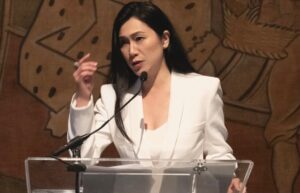
Agnes Hsu-Tang

Agnes Hsu-Tang

Distinguished Senior Fellow in EALAC
Educational Background

BA: Bryn Mawr College
MA: University of Pennsylvania
PhD: University of Pennsylvania (’04)

Dr. Agnes Hsu-Tang is Board Chair of The New York Historical and Chair of the Objects Conservation Visiting Committee at the Metropolitan Museum of Art.

Trained as an archaeologist and art historian, Dr. Hsu-Tang served on UNESCO’s (Paris) scientific committees from 2006 to 2013, participated on missions to Uzbekistan, Turkmenistan and China, and authored a white paper on the multi-national UNESCO inscriptions of the Qhapag Ñan (the Incan Road) and the Continental Silk Road (Chang’an to Tianshan Corridor).  From 2013 to 2014, Agnes advised President Obama’s Cultural Property Advisory Committee on the renewal of a bilateral agreement to reduce the illicit trafficking of cultural objects.  Agnes began her training in Classical languages in high school, and studied Classical art and archaeology and English literature at Bryn Mawr College.  After college, Agnes served as a special assistant to the late U.S. Ambassador James R. Lilley, a former envoy to China and Korea.  She also holds a M.A. in East Asian and Middle Eastern Studies from the University of Pennsylvania.

Agnes was a Mellon pre-doctoral fellow in History of Science at the Needham Research Institute at Cambridge University in 2003; she received her Ph.D. from the University of Pennsylvania in 2004.  From 2004 to 2007, Dr. Hsu-Tang was an inaugural Joukowsky fellow in archaeology at Brown University; she was a Mellon scholar in Classics at Stanford University from 2007 to 2008.  She joined Columbia University in 2015 and was appointed Distinguished Consulting Scholar at University of Pennsylvania’s Museum of Archaeology and Anthropology in 2018.

From 2008 to 2015, Dr. Hsu-Tang was involved in several international films on art and archaeology.  She was the bi-lingual host and narrator of two award-winning documentary series: an archaeology series on History Channel Asia (2011-2013), and a contemporary art series on Discovery Channel Asia (2014-2015) that premiered during 2014 Art Basel Hong Kong.  Her prior film credits include “The Giant Buddha at Leshan” (2009) and “Xi’an: China’s Forgotten City” (2010) on Discovery USA, “China’s Terracotta Warriors” on PBS (2011), and Mankind: The Story of All of Us series on History Channel (2012).

Dr. Hsu-Tang has been a director at the Institute of the Study of the Ancient World (ISAW) at New York University since 2013.  She is a co-founder of the Tang Center for Early China at Columbia University (2015), Tang Center for Silk Road Studies at UC Berkeley (2018), and Hsu-Tang Library for Classical Chinese Literature at Oxford University Press (2021).  She is a founding member of the Artist Protection Fund at the Institute of International Education (2014-2022), and served on the boards of the University of Pennsylvania’s Museum of Archaeology and Anthropology (2013-2018) and the Peabody Institute of Archaeology at Phillips Academy Andover (2015-2018).  She chaired Asia Society’s Global Arts Council (2015-2020), and was Executive Chair of Asia Society’s inaugural Triennial of Contemporary Asian Art in 2020.

Dr. Hsu-Tang is a longtime trustee of The New York Historical, and formerly, a managing director on the board of the Metropolitan Opera from 2014 to 2021, at which she chaired its nominating committee from 2018 to 2020 and served on the oversight committee.

Formerly trained as a Classical musician, Agnes made her debut at the Kennedy Center for the Performing Arts in 1989.  She is a recipient of two Mellon fellowships for her academic research, a teaching recognition from Brown University’s Department of History of Art and Architecture, and of the Institute of International Education’s (IIE) Centennial Medal and The Metropolitan Museum of Art’s Women Leaders Award for her work in cultural heritage.

Select Publications

“A Tomb with A View: Axonometry in Early Chinese Cartography” in Designing Boundaries: The Exercise of the Spatial Imagination in Pre-Modern China: Shaping the Expanse (Berlin: De Gruyter, 2022)

“Executive Chair’s Preface” and “Art of Virtue” in exhibition catalog We Do Not Dream Alone (Milan: Skira Editore SpA, 2021)

“Dreaming Together in a Divided World” in exhibition catalog Dreaming Together: New-York Historical Society and Asia Society (New York: New-York Historical Society, 2020)

“Structured Perceptions of Real and Imagined Landscapes in Early Imperial China” in Geography, Ethnography, and Perceptions of the World from Antiquity to the Renaissance (Oxford: Wiley-Blackwell, 2009)

“An Emic Perspective of the Ancient Mapmaker’s Art” in Journal of the Royal Asiatic Society (Cambridge: Cambridge University Press, 2007)

White paper: The Exceptional Universal Value of the Road Systems in Ancient Empires: A Comparative Study of the Chinese Oasis Route of the Early Silk Road and the Qhapag Ñan (Paris: UNESCO, 2006)

Madeleine Zelin

Madeleine Zelin

Dean Lung Professor of Chinese Studies

Office: 611 Kent Hall

Phone: (212) 854-2592 [I do not use my phone, please email]Email: mhz1@columbia.edu

Educational Background

BA: Cornell University (’70)
PhD: University of California, Berkeley (’79)

Selected Classes Taught

HSEA GU4891 Law in Chinese HIstory
HSEA GU4880 History of Modern China I
HSEA GU4884 Merchants, Markets and the State
HSEA GR8888 Colloquium on Chinese Legal History
HSEA G8861 Industrial Revolutions

Research Interests

Modern Chinese Legal and Economic History, Comparative History of Law and the Economy

Madeleine Zelin has, since her Ph.D. work at the University of California at Berkeley, taken an iconoclastic approach to the complex forces shaping modern China. Professor Zelin’s recent research has focused on legal history, the role of law in the Chinese economy and the interface between law, culture and the market in early modern China. She has written on state handling of economic disputes as well as the role of Chambers of Commerce as new sites for economic mediation. Her chapter on “Economic Freedom in Late Imperial China” (in William Kirby, ed., Realms of Freedom in Modern China, Stanford, 2004) challenges the assumption that the politically autocratic late Ming and Qing imperial regimes were restrictive in their handling of the private economy. Her latest book, The Merchants of Zigong, Industrial Enterprise in Early Modern China, is a study of an advanced industrial community in southern Sichuan from the eighteenth to the early twentieth century and provides new insights into the role of customary legal and business practices in China’s early modern economic development. It has been awarded the Fairbank Prize (American Historical Association), Alan Sharlin Memorial Award (Social Science History Association) and the Humanities Prize of the International Conference on Asian Studies (ICAS). As part of her commitment to mentoring younger scholars in legal and economic history of East Asia Professor Zelin serves as co-director of the first AAS New Directions Workshop: Economic History of Asia and is a founding board member of the International Society for Chinese Law and History. She is currently completing a book on China’s earliest company and bankruptcy law reforms at the onset of the twentieth century.

Selected Publications

Merchant Communities in Asia, 1600‐1980 (co-editor, Pickering and Chatto, 2015)

The Merchants of Zigong, Industrial Entrepreneurship in Early Modern China (Columbia, 2005)

The Magistrate’s Tael: Rationalizing Fiscal Reform in Eighteenth Century Ch’ing China (University of California, 1984)

  • Go to page 1
  • Go to page 2
  • Go to page 3
  • Interim pages omitted …
  • Go to page 9
  • Go to Next Page »

Before Footer

EALAC – Columbia University
407 Kent Hall 1140 Amsterdam Ave.
MC 3907  New York, NY 10027
tel:212.854.5027

Footer

  • Facebook
  • Instagram
  • Twitter
  • ABOUT
  • PEOPLE
  • PROGRAMS
  • EVENTS
  • SUPPORT

Copyright © 2026 · Columbia University Department of East Asian Languages and Cultures

Copyright © 2026 · EALAC on Genesis Framework · WordPress · Log in