• Skip to main content
  • Skip to footer

  • ABOUT
    • Greetings from the Department Chair
    • Department History
    • News
    • Affiliates
    • Support
    • Contact EALAC
  • PEOPLE
    • Faculty
    • Administration
    • Graduate Students
    • Recent Alumni
  • PROGRAMS
    • Undergraduate
    • Graduate
    • Language Programs
    • Academic Year 2025-2026 Courses
  • EVENTS
  • SUPPORT

Faculty-Language-Pedagogy

Sonam Tsering

Sonam_Profile_Picture_sm

Sonam Tsering

Senior Lecturer in Tibetan, Director of the Tibetan Language Program

Office: 502-G Kent Hall
Office Hours: Thursdays, 4:00–5:30 PM
Phone: (212) 854-0596
Email: st2931@columbia.edu

Educational Background

BA: Social Anthropology, University of London

Classes Taught

TIBT UN1600 First Year Modern Colloquial Tibetan I
TIBT UN1601 First Year Modern Tibetan II
TIBT UN2603 Second Year Modern Colloquial Tibetan I
TIBT UN2604 Second Year Modern Tibetan II
TIBT UN3611 Third Year Modern Colloquial Tibetan I
TIBT UN3612 Third Year Modern Tibetan II

Research Interests

Tibetan Language

Sonam Tsering is the director of the Tibetan language program at Columbia. Sonam previously taught at the University of Michigan, where he also remotely taught students at Yale and Ohio State University, via live video technology. Originally from Rebgong (Qinghai, PRC), Sonam later lived in the Tibetan community in exile in India, founding and editing Bod kyi Dus bab (Tibet Times newspaper).

Online publications

Co-authored, Basic Tibetan. Michigan State University Libraries, 2026. Open Educational Resource (OER), multimedia interactive online textbook.

“Introduction” for the English translation of The Division of Heaven and Earth: On Tibet’s Peaceful Revolution, by Shokdung. Hurst Publishers, 2016.

“The Historical Polity of Repgong” (The Tibetan and Himalayan Library, 2011) http://places.thlib.org/features/23751/descriptions/1225

Translation: Clear Sky and Red Earth – A Himalayan Story by Sienna Craig, Illustrations by Tenzin Norbu, (Mera Publications, 2004)

“Ipolito Desideri” (Latse Library Newsletter, 2004)

“La dwags kyi ag bar and its background” (Latse Library Newsletter, 2005)

New York Regular contribution to Nyenchen Thanglha, Nor Od, Tibetan Review, Mangtso and Tibet Times, Dharamasala, India 1987 – 1993

Numerous Articles in Qinghai Zangwen Bao (Qinghai Tibetan Language Newspaper), Qinghai Fazhi Bao (Qinghai Law Magazine), Xining, PRC

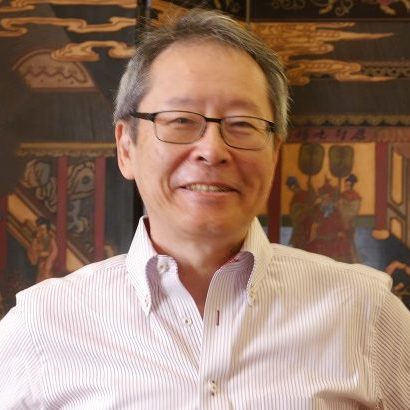
Chikako Takahashi

Chikako Takahashi

Lecturer in Japanese

Office: 520 Kent Hall
Office Hours: Wednesdays and Thursdays from 4:00 – 5:00 PM

Phone: (212) 854-5502
Email: ct2423@columbia.edu

Educational Background

PhD: Linguistics, Stony Brook University
MA: TESOL, Teachers College, Columbia University

Classes Taught

JPNS 1002 Introductory Japanese B
JPNS 1101 First Year Japanese I
JPNS1102 First Year Japanese II
JPNS2201 Second Year Japanese I
JPNS2202 Second Year Japanese II

Research Interests

Second Language Phonetics Learning
Use of Discord for Language Classrooms
Language Learning Strategies and Motivation

Chikako Takahashi holds a PhD in Linguistics from Stony Brook University. Her dissertation research focused on how speakers’ pronunciation and perception of their first and second (or third) languages are influenced by their language learning experiences. Currently, her research focuses on how the use of online community platforms such as Discord can help create a learner community for language classes. She is also interested in how instructors can inform learners and provide opportunities to foster language learning strategies and elicit lasting motivation. Prior to coming to Columbia, she taught Japanese courses at the Japan Society as well as linguistic courses—such as Phonetics and Phonology, Sociolinguistics, and Second Language Acquisition—at both the undergraduate and graduate levels at various institutions.

Publications

Journal Publications (Peer-reviewed) 

Takahashi, C. (2024). L1 Japanese Perceptual Drift in Late Learners of L2 English. Languages 9: 0.

Takahashi, C. (2023). L1 vowel perceptual boundary shift as a result of L2 vowel learning. Journal of Phonetics, 100.

Hwang, J., Takahashi, C., Baek, H. Baek, Yeung, A. HL., and E. Broselow (2022). Do L1 tone language speakers enjoy a perceptual advantage in processing English contrastive prosody?   Bilingualism: Language and Cognition.

Takahashi, C. (2019). No transposition in Harmonic Serialism, Phonology, 36, 4.

Takahashi, C. (2012). Impact of Dictionary Use Skills Instructions on Second Language Writing, Working Papers in TESOL and Applied Linguistics, Teachers College, Columbia University, 12 (2).

Proceedings Papers

Takahashi, C. and Yagi, M. (2025). Fostering a learner community with collaboration apps and AI tools outside of the classroom: the case with Discord. Proceedings of The 31st Princeton Japanese Pedagogy Forum, 100-112, Department of East Asian Studies, Princeton University, Princeton, NJ.

Yeung, A., Baek, H., Takahashi, C., Buttner, S., Hwang, J., and E. Broselow (2020). Too little, too late: A longitudinal study of English corrective focus by Mandarin speakers. Proceedings of the Linguistic Society of America, 5(1). 270-281.

Yeung, A., Baek, H., Takahashi, C., Duncan, J., Benedett, S., Hwang, J., and E. Broselow, (2019). Pitch range, intensity, and vocal fry in non-native and native English focus intonation. Proceedings of Meetings on Acoustics, 36, Acoustic Society of Americ

Takahashi, C. (2018). No Metathesis in Harmonic Serialism. In Gallagher, G., Gouskova, M., and S. Yin, (eds.), Supplemental proceedings of the 2017 Annual Meeting on Phonology. Washington, DC: Linguistic Society of America. http://dx.doi.org/10.3765/amp.v5i0.4232.

Takahashi, C., Kao, S., Baek, H., Yeung, A. HL., Hwang, J., and E. Broselow, (2018). Native and non- native speaker processing and production of contrastive focus prosody. Proceedings of the Linguistic Society of America (Vol. 3)

Takahashi, C. (2017). Information Structure of Japanese Ditransitives. In Funakoshi, K., S. Kawahara, and C. Tancredi, (eds.), Japanese/Korean Linguistics, 24, Stanford; CSLI Publications

Kao, S., Hwang, J., Baek, H., Takahashi, C., and E. Broselow, (2016). International teaching assistants’ production of focus intonation. Proceedings of Meetings on Acoustics, 26, Acoustic Society of America

Recent Presentations

Chikako Takahashi and Mihoko Yagi, Fostering a learner community with collaboration apps and AI tools outside of the classroom: the case with Discord, 31st Princeton Japanese Pedagogy Forum, 2025, Princeton NJ. 

Chikako Takahashi and Mihoko Yagi, Building Inclusive and Engaging Learning Communities through Technology: The Case of Discord in Beginner Japanese Courses, Northeast Association for Language Learning Technology, 2025, Zoom Conference.

Kyoko Matsui Loetscher, Naoko Sourial, and Chikako Takahashi, Curriculum Reform to
Foster Multiliteracies, International Conference on Japanese Language Education – North
America, August 1-3, 2024, Wisconsin, Madison.

Kyoko Matsui Loetscher, Naoko Sourial, and Chikako Takahashi, Report on Blended-learning Model in Elementary Japanese Courses – toward fostering learning agency, AATJ Spring Conference, March 16, 2023, Boston.

Chikako Takahashi, Effect of second language learning factors on first language phonetic change. American Association for Applied Linguistics 2022 Conference, March 19-22, 2022 (Poster Presentation)

Chikako Takahashi, L1 vowel perceptual drift as a result of L2 vowel learning: L1 Japanese -L2 English bilinguals’ perception of high front vowels. The 96th Annual Meeting of the Linguistic Society of America, Jan. 6-9, 2022, Washington, DC.


Haruo Shirane

Haruo Shirane

Shincho Professor of Japanese Literature, Vice Chair of the Department of East Asian Languages and Cultures, Faculty Director of the Donald Keene Center

Office: 420 Kent Hall
Office Hours: On leave for the 2026-2027 academic year
Phone: (212) 854-5031
Email: hs14@columbia.edu

Educational Background

BA: Columbia College (’74)
MA: University of Michigan (’77)
PhD: Columbia University (’83)

Classes Taught

JPNS GU4007 Introduction to Classical Japanese
JPNS GR8040 Graduate Seminar in Premodern Japanese Literature

Research Interests

Japanese Literature, Print Culture, Performance and Media

Haruo Shirane, Shincho Professor of Japanese Literature and Culture and chair of the Department of East Asian Languages and Cultures at Columbia University, teaches and writes on premodern and early modern Japanese literature and culture, with particular interest in prose fiction, poetry, performative genres (such as storytelling and theater), and visual culture. He is finishing a book called Media, Performance, and Play: Japanese Culture from Outside In, which focuses on the role of manuscript culture, media, vocality, and performance, viewing cultural processes from the social periphery. Japan and the Culture of the Four Seasons (Columbia University Press, 2012) explored the cultural constructions of nature across a wide spectrum of literature, media, and visual arts from the ancient period to the modern. Most recently, he has coedited Monsters, Animals, and Other Worlds: A Collection of Short Medieval Tales (Columbia University Press, 2018); Reading The Tale of Genji: The First Millennium(Columbia University Press, 2015); and Cambridge History of Japanese Literature (Cambridge University Press, 2015).

Haruo Shirane has been engaged in bringing new approaches to the study of Japanese literary culture. This has resulted in Japanese Literature and Literary Theory (Nihon bungaku kara no hihyo riron, Kasama shoin, 2009, edited with Fujii Sadakazu and Matsui Kenji) and New Horizons in Japanese Literary Studies (Bensei Publishing, 2009), both of which explore new issues and methodologies in the study of print and literary culture. He also edited Food in Japanese Literature (Shibundo, 2008), Overseas Studies on The Tale of Genji (Ofu, 2008) and Envisioning The Tale of Genji: Media, Gender, and Cultural Production (Columbia University Press, 2008). The latter two books analyze the impact of The Tale of Genji on Japanese cultural history in multiple genres and historical periods.

Haruo Shirane translated and edited a number of volumes on Japanese literature. These include Classical Japanese Literature, An Anthology: Beginnings to 1600 (Columbia University Press, 2006), Early Modern Japanese Literature: An Anthology, 1600-1900 (Columbia University Press, 2002; abridged edition, 2008), The Tales of the Heike (Columbia University Press, 2006, paperback 2008), and The Demon at Agi Bridge and Other Japanese Tales (Columbia University Press, 2010), a collection of setsuwa (anecdotal literature).

He is also deeply involved with the history of Japanese language and pedagogical needs and have written Classical Japanese Reader and Essential Dictionary (2007) and Classical Japanese: A Grammar (Columbia University Press, 2005).

Haruo Shirane is the recipient of Fulbright, Japan Foundation, SSRC, NEH, and Hakuhodo grants, and has been awarded the Kadokawa Genyoshi Prize, Ishida Hakyo Prize, and most recently the Ueno Satsuki Memorial prize (2010) for outstanding research on Japanese culture. He is presently the Chair of the Department of East Asian Languages and Cultures.

Professor’s Shirane’s personal website

Selected Publications

Cambridge History of Japanese Literature (chief editor, Cambridge, 2015)

Japan and the Culture of the Four Seasons (Columbia, 2012)

Inventing the Classics: Modernity, National Identity, and Japanese Literature (co-editor with Tomi Suzuki, 2001).

Traces of Dreams: Landscape, Cultural Memory, and the Poetry of Bashô (Stanford, 1998)

The Bridge of Dreams: A Poetics of the Tale of Genji (Stanford, 1987)

  • « Go to Previous Page
  • Go to page 1
  • Interim pages omitted …
  • Go to page 5
  • Go to page 6
  • Go to page 7
  • Go to page 8
  • Go to page 9
  • Interim pages omitted …
  • Go to page 13
  • Go to Next Page »

Before Footer

EALAC – Columbia University
407 Kent Hall 1140 Amsterdam Ave.
MC 3907  New York, NY 10027
tel:212.854.5027

Footer

  • Facebook
  • Instagram
  • Twitter
  • ABOUT
  • PEOPLE
  • PROGRAMS
  • EVENTS
  • SUPPORT

Copyright © 2026 · Columbia University Department of East Asian Languages and Cultures

Copyright © 2026 · EALAC on Genesis Framework · WordPress · Log in