• Skip to main content
  • Skip to footer

  • ABOUT
    • Greetings from the Department Chair
    • Department History
    • News
    • Affiliates
    • Support
    • Contact EALAC
  • PEOPLE
    • Faculty
    • Administration
    • Graduate Students
    • Recent Alumni
  • PROGRAMS
    • Undergraduate
    • Graduate
    • Language Programs
    • Academic Year 2025-2026 Courses
  • EVENTS
  • SUPPORT

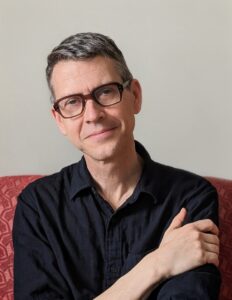
Lecturer

Gavin Healy

Gavin Healy

Office hours: M 10am-12 noon
E-mail: gh148@columbia.edu

Educational Background

BA: Cornell University
JD: Columbia University School of Law
MA: Chinese University of Hong Kong
PhD: Columbia University

Classes Taught

ASCE UN1359 Introduction to East Asian Civilizations: China
AHUM UN1400 Colloquium on Major Texts: East Asia

Research Interests

History of Late Imperial/Modern China, Cold War in Asia, Comparative Labor History, Tourism History,
History and Cinema Gavin Healy is a historian of modern China. In addition to his teaching at Columbia, he is a Center
Associate of the Lieberthal-Rogel Center for Chinese Studies at the University of Michigan. His book, A
Guide to Mao’s China: Showing the Nation to Foreign Guests, examines how personnel within China’s
state tourism bureaucracy struggled to balance the use of tourism as a form of political, historical, and
cultural representation with the demands of developing a revenue-generating service industry in a socialist
economy. His research has been supported by grants and fellowships from the Social Science Research
Council, the American Historical Association, and the Weatherhead East Asian Institute. Prior to his work
as a historian, he practiced law in New York, Hong Kong, and Seoul for ten years.


Selected Publications

A Guide to Mao’s China: Showing the Nation to Foreign Guests (Cornell University Press, 2026).
https://www.cornellpress.cornell.edu/book/9781501785900/a-guide-to-maos-china/#bookTabs=1

“Michelangelo Antonioni, Tourist Snapshots, and the Politics of the ‘Backward Scene’ in 1970s China,”
Journal of Contemporary History 59, no. 4 (October 2024): 732-753.
https://journals.sagepub.com/doi/abs/10.1177/00220094241271006

“Fuwuyuan on Film: Cinema, Socialist Education, and Service Labor from the Great Leap Forward to
Reform and Opening Up,” Modern China 50, no. 2 (March 2024): 200-230.
https://journals.sagepub.com/doi/10.1177/00977004231170526

“Touring the Socialist World: The Political and Cultural Economy of China’s Outbound Tourism, 1956-
1965,” Twentieth-Century China 46, no. 1 (January 2021): 83-102.
https://dx.doi.org/10.1353/tcc.2021.0005
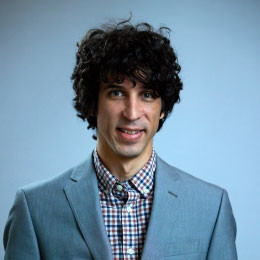
Cameron Foltz

Cameron Foltz

Postdoctoral Research Scholar, Heyman Center for the Humanities
Lecturer, Department of East Asian Languages and Cultures
 

Office: 
Office Hours: 

Email: CF2747@columbia.edu


Cameron Foltz is a Postdoctoral Research Scholar at Weatherhead East Asian Institute and Lecturer in the Department of East Asian Languages and Cultures at Columbia University. His research examines the intersections of religion, governance, and territoriality in Inner Asia, with a focus on the environmental and political histories of the Tibetan plateau. Broadly, his work engages questions of sovereignty, monastic institutions, and the transformation of frontier zones through religious and economic exchange.

His book project, “Constructing Qinghai: Pastoralist Settlement, Monastic Territorialization, and State Incorporation (1724–1935),” argues that Tibetan pastoralists territorialized the Blue Lake (Chinese: Qinghai hu; Tibetan: Tsongönpo; Mongolian: Kokenuur) grasslands through the establishment of permanent monasteries. The monasteries’ integration of Tibetan pastoralists as their patron communities, their wider religious networks, and their role in taming local territorial deities remade the Blue Lake region. The Tibetan communities funded monastery construction through the sale of their sheep’s wool during an international wool boom (c. 1880–1929) fueled by US carpet production. After the collapse of the Qing Empire in 1912, the wool trade drew the Xining-based Ma militarists into the Blue Lake region. Ma Qi (1869–1931) and his brother and son, Ma Lin (1876–1945) and Ma Bufang (1903–1975), engaged in their own practice of territorialization that sought to secure their place in the nascent Republic of China. This process resulted in the establishment of Qinghai Province in 1929. However, the Chinese administrative presence on the Blue Lake grasslands was hollow and contingent upon the monastic territorialization established by Tibetan pastoralists.

Support for his research has been provided by Fulbright-Hays Doctoral Dissertation Research Award, the Institute of History and Philology at Academia Sinica, the Weatherhead East Asian Institute at Columbia, and the Sasakawa Young Leaders Fellowship Fund.

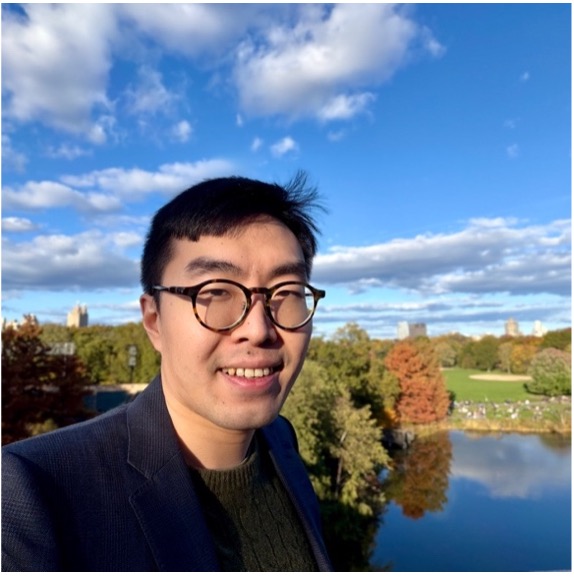
Yifan Zhang

Yifan Zhang

Postdoctoral Research Scholar, Heyman Center for the Humanities
Lecturer, Department of East Asian Languages and Cultures
 

Office: Heyman Center B-204
Office Hours: Wednesdays 2-4 pm (and by appointment)

Email: yz2681@columbia.edu

 
Educational Background
BA: Peking University
MA: Columbia University
PhD: Columbia University
 
Classes Taught
Asian Humanities UN1400: Colloquium on Major Texts
East Asian GU4255: Cities and Everyday Life in Chinese Cultural History
 
Research Interests

Early modern Chinese literature (particularly fiction, drama, and popular literature); urban history; local language, writing, print, and oral media; knowledge and material cultures


Yifan Zhang is a scholar of Chinese literature and cultural history with a focus on the Ming-Qing period (1368-1911). He originally trained in Chinese philology and classical textual scholarship. His interest in the heterogeneity of the Ming-Qing cultural landscape has led him to draw on interdisciplinary methods to engage with both canonical and non-canonical genres, with particular attention to the role of literary practices in world-making.

He is currently preparing a book manuscript based on his dissertation on the entrepreneurial editor Feng Menglong’s (1574-1646) Mountain Songs. This project explores the generative potential of the local Wu language, otherwise marginalized or romanticized, in Feng’s artful reinvention of a racy song genre across media, and in the making of the city of Suzhou as both a material arena and sensuous imagery of fashion in early modern China. By rectifying conventional discourses on the folksong, it offers a new framework for understanding the localized, embodied dynamics of early modern culture-making.

His second book project seeks to probe the interrelation between environmental disorder, literary imagination, and empire-building by focusing on the issue of water in China’s long eighteenth century. His other ongoing projects include the craze for a Suzhou-branded playing-card game in the seventeenth century, and the intertwined aesthetics of Ming-Qing vernacular fiction and the decorative arts of domestic spaces and objects.

  • Go to page 1
  • Go to page 2
  • Go to page 3
  • Interim pages omitted …
  • Go to page 12
  • Go to Next Page »

Before Footer

EALAC – Columbia University
407 Kent Hall 1140 Amsterdam Ave.
MC 3907  New York, NY 10027
tel:212.854.5027

Footer

  • Facebook
  • Instagram
  • Twitter
  • ABOUT
  • PEOPLE
  • PROGRAMS
  • EVENTS
  • SUPPORT

Copyright © 2026 · Columbia University Department of East Asian Languages and Cultures

Copyright © 2026 · EALAC on Genesis Framework · WordPress · Log in