• Skip to main content
  • Skip to footer

  • ABOUT
    • Greetings from the Department Chair
    • Department History
    • News
    • Affiliates
    • Support
    • Contact EALAC
  • PEOPLE
    • Faculty
    • Administration
    • Graduate Students
    • Recent Alumni
  • PROGRAMS
    • Undergraduate
    • Graduate
    • Language Programs
    • Academic Year 2025-2026 Courses
  • EVENTS
  • SUPPORT

Lecturer

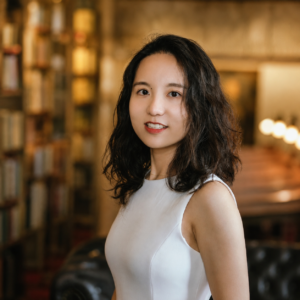
Guoying Gong

Guoying Gong

Postdoctoral Research Scholar, Heyman Center for the Humanities
Lecturer, Department of East Asian Languages and Cultures
 
Office: Heyman Center B204
Office Hours: Tuesdays, 3:00–5:00 pm
Email: gg2711@columbia.edu
 
Educational Background
BA: Peking University
MA: Peking University / University of Colorado at Boulder
PhD: Columbia University
 
Classes Taught
AHUM UN1400: Colloquium on Major Texts: East Asia
 
Research Interests

Guoying Gong is a scholar of premodern Chinese literature whose research focuses on medieval Chinese poetry, classical exegesis, and literary thought and criticism. She is currently revising her dissertation into a book manuscript titled Writing Home and Empire from the Margins: Longing and Belonging in Du Fu’s (712–770) Poetry. This project investigates how poetry both reflected and shaped cultural transformation during the pivotal period following the An Lushan Rebellion (755–763), with a focus on Du Fu’s post-rebellion writings composed during his years in exile.

It argues that Du Fu’s literary experimentation was driven by a sustained negotiation of evolving notions of home and newly imagined visions of empire articulated from the margins. By exploring the intersections of poetry with material, infrastructural, and social realms—including geography, transportation, and the circulation of information—the study demonstrates how encounters with unfamiliar landscapes, compromised infrastructure, and disrupted communication on the empire’s peripheries not only shaped Du Fu’s poetic expression but also expanded the formal and conceptual possibilities of the poetic medium, allowing him to re-envision both home and empire.

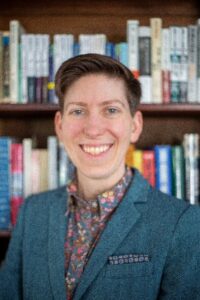
Sue Y. Yoon

Sue Y. Yoon

Lecturer in Korean

Office: 502-G Kent Hall
Office Hours: TW 4-5 PM
Phone: (212) 854-5038
Email: syy2121@columbia.edu

Educational Background

PhD: Korean Language and Linguistics, University of Hawaiʻi at Mānoa (2023)
MA: Linguistics with specialization in Language Teaching Studies, University of Oregon (2017)
MA: Korean Linguistics and Pedagogy, University of Oregon (2017)
BA: Linguistics, University of Oregon (2015)

Classes Taught

KORN UN1101 First Year Korean
KORN UN2201 Second Year Korean

Research Interests

Korean Linguistics and Pedagogy
Interactional Linguistics
Conversation Analysis
Multimodality

Sue Y. Yoon received her doctoral degree in Korean Language and Linguistics from the University of Hawaiʻi at Mānoa. Her dissertation, titled “The Interactional Uses of Response Tokens in Korean Conversation: As Resources for Managing Turns, Sequences, and Stances”, examines how the recipient of a turn deploys response tokens to accomplish a diverse range of interactional work.

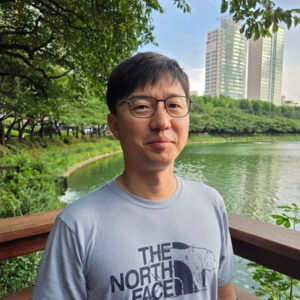
Hyunkyu Yi

Hyunkyu Yi

Lecturer in Korean

Office: 502-C Kent Hall
Office Hours: TR 4:10 PM-5:10 PM
Phone: (212) 854-5144
Email: hy122@columbia.edu

Educational Background

MA: East Asian History, Yonsei University (1987)
BA: History, Yonsei University (1982)

Classes Taught

KORN UN1001 Introductory Korean A
KORN UN1002 Introductory Korean B
KORN UN3005 Third-Year Korean N I
KORN GU4106 Fourth Year Korean II
KORN GR8010 Advanced Korean in Mixed Script

Research Interests

Korean Language Pedagogy

HyunKyu Yi taught Korean at Korean Language Institute in Yonsei University from 1988 to 1996. Hyunkyu Yi joined Columbia faculty in 1996.

Online publications

Korean for Overseas Koreans (English) (National Institute for International Education, Ministry of Education of Republic of Korea, 2017; co-author)
Standardized Tests for Korean Schools (the National Association for Korean Schools, 2016)
Korean 5 (Ministry of Education Science and Technology, 2011; co-author)
Korean 6 (Ministry of Education Science and Technology, 2011; co-author)
Korean Language curriculum for Korean School (NAKSNEC –The National Association for Korean School s Northeast Chapter, 2011; co-author)
Korean Language II (Second edition) (Korea Culture Research Inc., 2010; co-author)
Korean Language I – Easy to learn – (Third edition) (Korea Culture Research Inc., 2008; co-author)
“Teaching Korean Grammar” (Bulletin of the National Association for Korean Schools (NAKS), 2006)
Korean Language I – Easy to learn – (Second edition) (Korea Culture Research Inc., 2004; co-author)
Korean Language II (Korean Language Center of New York, 2002)
“Teaching of Speaking Korean Language in the Classroom”, (Bulletin of the National Association for Korean School (NAKS), 2001)
Korean Language I – Easy to learn – (Korean Language Center of New York, 2000; co-author)
Korean Language I (CD-ROM) (Korean Language Center of New York, 2000)
“How to Teach Speaking” (Bulletin of the National Association for Korean School (NAKS), 2000)

  • Go to page 1
  • Go to page 2
  • Go to page 3
  • Interim pages omitted …
  • Go to page 10
  • Go to Next Page »

Before Footer

EALAC – Columbia University
407 Kent Hall 1140 Amsterdam Ave.
MC 3907  New York, NY 10027
tel:212.854.5027

Footer

  • Facebook
  • Instagram
  • Twitter
  • ABOUT
  • PEOPLE
  • PROGRAMS
  • EVENTS
  • SUPPORT

Copyright © 2026 · Columbia University Department of East Asian Languages and Cultures

Copyright © 2026 · EALAC on Genesis Framework · WordPress · Log in