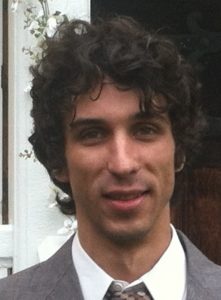
Tianyuan Huang
Field: Japanese History
Advisor: Gregory Pflugfelder
Email: th2750@columbia.edu
Filed Under: recent-phds

Field: Japanese History
Advisor: Gregory Pflugfelder
Email: th2750@columbia.edu
Filed Under: recent-phds

Field: Modern Japanese History
Advisors: Gregory Pflugfelder & Paul Kreitman
Email: mlh2210@columbia.edu
Dr. Michelle L. Hauk is an Assistant Professor in Architectural History and Theory at the Sam Fox School of Design & Visual Arts at Washington University in St. Louis. Trained in both architectural design and history, she specializes in the history of architecture, technology, and society in twentieth-century Japan. After earning her Ph.D. in Japanese History from the Department of East Asian Languages and Cultures at Columbia University in 2023, she spent one year as a postdoctoral fellow at the Reischauer Institute of Japanese Studies at Harvard University. A recipient of both the Fulbright Graduate Study/Research Award and a Fulbright-Hays Doctoral Dissertation Research Abroad Grant, Dr. Hauk received her M.Arch and MSAS from Washington University in St. Louis (WashU) in 2015.
Dr. Hauk’s research focuses on the rapid evolution of Japan’s residential environment and everyday life in the twentieth century on both an urban and domestic scale, particularly in the design of public housing and postwar new towns. Her current project examines how the development of water infrastructure and the technologies that organize its flow reconfigured the twentieth-century Japanese dwelling and paved the way for the prefabrication of its kitchens and baths. In her scholarship and teaching, she considers the ways in which the design of water within domestic environments intersects with social relationships, cultural practices, and the natural environment.
Dr. Hauk offers seminars on topics including Japanese architecture, East Asian urbanism, women in architecture, and the design history of water-related spaces, where she combines research and writing with studio-based exercises that directly engage students with primary-source architectural documents, literature, and film.
Filed Under: recent-phds

Field: Tibetan and Chinese History
Advisor: Gray Tuttle
Email: c.foltz@columbia.edu
Cameron Foltz is a PhD candidate specializing in nineteenth and twentieth-century Chinese and Tibetan history. He is broadly interested in territoriality, migration, ethnicity, and governance in China’s western frontiers.
His dissertation project draws on Chinese and Tibetan sources to demonstrate that an international wool boom (c. 1880–1930) driven by US carpet production profoundly reshaped the political geography of what would become Qinghai Province (f. 1928) in northwest China. Tibetan pastoralists, who supplied much of the wool, were enriched enough to build community monasteries to territorialize lands that they seized from Mongol communities. Following the collapse of the Qing Dynasty in 1912, this lucrative trade soon drew the attention of the Hui Muslim military rulers in Xining who sought to monopolize its profits and incorporate disparate communities into the new province. His second project focuses on decollectivization among pastoralists in Qinghai Province.

EALAC – Columbia University
407 Kent Hall 1140 Amsterdam Ave.
MC 3907 New York, NY 10027
tel:212.854.5027