• Skip to main content
  • Skip to footer

  • ABOUT
    • Greetings from the Department Chair
    • Department History
    • News
    • Affiliates
    • Support
    • Contact EALAC
  • PEOPLE
    • Faculty
    • Administration
    • Graduate Students
    • Recent Alumni
  • PROGRAMS
    • Undergraduate
    • Graduate
    • Language Programs
    • Academic Year 2025-2026 Courses
  • EVENTS
  • SUPPORT

Literature

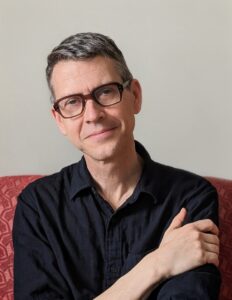
Gavin Healy

Gavin Healy

Office hours: Wednesday 1:00pm-3:00pm, Thursday 3:00pm-4:00pm;
624 Kent Hall
E-mail: gh148@columbia.edu

Educational Background

BA: Cornell University
JD: Columbia University School of Law
MA: Chinese University of Hong Kong
PhD: Columbia University

Classes Taught

HSEA GU4880 History of Modern China I
EAAS GU4625 Beyond the Bamboo Curtain: Socialist China in the World
ASCE UN1359 Introduction to East Asian Civilizations: China
AHUM UN1400 Colloquium on Major Texts: East Asia

Research Interests

History of Late Imperial/Modern China, Cold War in Asia, Comparative Labor History, Tourism History, History and Cinema

Gavin Healy is a historian of modern China. In addition to his teaching at Columbia, he is a Center Associate of the Lieberthal-Rogel Center for Chinese Studies at the University of Michigan. His book, A Guide to Mao’s China: Showing the Nation to Foreign Guests, examines how personnel within China’s state tourism bureaucracy struggled to balance the use of tourism as a form of political, historical, and cultural representation with the demands of developing a revenue-generating service industry in a socialist economy. His research has been supported by grants and fellowships from the Social Science Research Council, the American Historical Association, and the Weatherhead East Asian Institute. Prior to his work as a historian, he practiced law in New York, Hong Kong, and Seoul for ten years.

Selected Publications

A Guide to Mao’s China: Showing the Nation to Foreign Guests (Cornell University Press, 2026). https://www.cornellpress.cornell.edu/book/9781501785900/a-guide-to-maos-china/#bookTabs=1

“Michelangelo Antonioni, Tourist Snapshots, and the Politics of the ‘Backward Scene’ in 1970s China,” Journal of Contemporary History 59, no. 4 (October 2024): 732-753. https://journals.sagepub.com/doi/abs/10.1177/00220094241271006

“Fuwuyuan on Film: Cinema, Socialist Education, and Service Labor from the Great Leap Forward to Reform and Opening Up,” Modern China 50, no. 2 (March 2024): 200-230. https://journals.sagepub.com/doi/10.1177/00977004231170526

“Touring the Socialist World: The Political and Cultural Economy of China’s Outbound Tourism, 1956-1965,” Twentieth-Century China 46, no. 1 (January 2021): 83-102. https://dx.doi.org/10.1353/tcc.2021.0005
Cameron Foltz

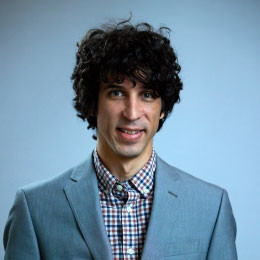
Cameron Foltz

Postdoctoral Research Scholar, Weatherhead East Asian Institute
Lecturer, Department of East Asian Languages and Cultures
 

Office: 
Office Hours: 

Email: CF2747@columbia.edu

Website: www.cameronfoltz.com

Cameron Foltz is a Postdoctoral Research Scholar at Weatherhead East Asian Institute and Lecturer in the Department of East Asian Languages and Cultures at Columbia University. His research examines the intersections of religion, governance, and territoriality in Inner Asia, with a focus on the environmental and political histories of the Tibetan plateau. Broadly, his work engages questions of sovereignty, monastic institutions, and the transformation of frontier zones through religious and economic exchange.

His book project, “Constructing Qinghai: Pastoralist Settlement, Monastic Territorialization, and State Incorporation (1724–1935),” argues that Tibetan pastoralists territorialized the Blue Lake (Chinese: Qinghai hu; Tibetan: Tsongönpo; Mongolian: Kokenuur) grasslands through the establishment of permanent monasteries. The monasteries’ integration of Tibetan pastoralists as their patron communities, their wider religious networks, and their role in taming local territorial deities remade the Blue Lake region. The Tibetan communities funded monastery construction through the sale of their sheep’s wool during an international wool boom (c. 1880–1929) fueled by US carpet production. After the collapse of the Qing Empire in 1912, the wool trade drew the Xining-based Ma militarists into the Blue Lake region. Ma Qi (1869–1931) and his brother and son, Ma Lin (1876–1945) and Ma Bufang (1903–1975), engaged in their own practice of territorialization that sought to secure their place in the nascent Republic of China. This process resulted in the establishment of Qinghai Province in 1929. However, the Chinese administrative presence on the Blue Lake grasslands was hollow and contingent upon the monastic territorialization established by Tibetan pastoralists.

Support for his research has been provided by Fulbright-Hays Doctoral Dissertation Research Award, the Institute of History and Philology at Academia Sinica, the Weatherhead East Asian Institute at Columbia, and the Sasakawa Young Leaders Fellowship Fund.

Lili Xia

Lili Xia

Assistant Professor of Premodern Chinese Literature, Barnard College

Office:  317 Milbank Hall, Barnard College

Office Hours: On leave in fall 2026
W 4:10–6:00pm & by appointment in spring 2027

Email:  lxia@barnard.edu

Educational Background

BA: Fudan University
MA: Fudan University
PhD: Princeton University

Classes Taught

FYSB BC1001 Cultural Memory
AHUM UN1400 Colloquium on Major Texts: East Asia
EAAS BC3840 Beyond the Great Wall: Nomadic Empires and China
EAAS GU4370 Literati Culture in Pre-Modern China
EAAS GR8383 Crossroads in Middle-Period China: Topics of Song-Jin-Yuan Literary Culture

Research Interests

Lili Xia is a scholar of premodern Chinese literature. Her broader research interests include Sino-steppe interactions, cultural memory, print and book culture, intermediality, and digital humanities.

She is now working on her book project titled “North against South in Middle Period China: Classical Poetry and Literati Culture under Jurchen Jin Rule (1115–1234).” By demonstrating a rival narrative of claiming China in the Sino-Jurchen North against the cultural orthodoxy conceptualized in the Han Chinese-ruled South, the book illustrates the burgeoning literati culture under Jurchen rule, and fleshes out the Jin poetic production in particular. While making full use of Jin literary texts, this book is further enriched by art history and material culture, as well as digital tools of social network and geographic analysis to better represent Jin literati culture on the whole. Her research aims to reveal the heterotopia and heteroglossia of China as an intersubjective, transcultural, and border-crossing space in the Middle Period (800–1400 CE).

Before coming to Barnard, she received her B.A. and M.A. in Classical Chinese Literature at Fudan University, and her Ph.D. in East Asian Studies at Princeton University. She was the 2023–24 Louis Frieberg Postdoctoral Fellow in the Department of Asian Studies at the Hebrew University of Jerusalem. She is currently a 2026 visiting fellow at the Ying-shih Yü International Center for History and the Chinese Humanities (YCHCH), National Taiwan University.

Selected Publications

“Teaching Sinitic Knowledge of the Universal Ruler in Jin-Yuan Court Lectures and Civil Education.” Journal of Song-Yuan Studies 55 (2026): 54–102.

“To Build or Not to Build? Frontier Walls, Trenches, and Forts in Mid-Jin Politics, 1161–1208.” Co-authored with Johannes S. Lotze, Zhidong Zhang, and Gideon Shelach-Lavi. T’oung Pao 112 (2026): 163–214.

“Qiuchi as Heterotopia: The Other Space for Su Shi.” Journal of the American Oriental Society 142.1 (2022): 93–119.

“Two Narratives of ‘Grand Peace’ in Northern Song Historiography and the Song Cultural Memory” (北宋仁、徽兩朝的“太平敍事”與宋人文化記憶). Zhonghua wenshi luncong (Journal of Chinese Literature and History) 139 (2020): 219–40. (in Chinese)

  • Go to page 1
  • Go to page 2
  • Go to page 3
  • Interim pages omitted …
  • Go to page 5
  • Go to Next Page »

Before Footer

EALAC – Columbia University
407 Kent Hall 1140 Amsterdam Ave.
MC 3907  New York, NY 10027
tel:212.854.5027

Footer

  • Facebook
  • Instagram
  • Twitter
  • ABOUT
  • PEOPLE
  • PROGRAMS
  • EVENTS
  • SUPPORT

Copyright © 2026 · Columbia University Department of East Asian Languages and Cultures

Copyright © 2026 · EALAC on Genesis Framework · WordPress · Log in