• Skip to main content
  • Skip to footer

  • ABOUT
    • Greetings from the Department Chair
    • Department History
    • News
    • Affiliates
    • Support
    • Contact EALAC
  • PEOPLE
    • Faculty
    • Administration
    • Graduate Students
    • Recent Alumni
  • PROGRAMS
    • Undergraduate
    • Graduate
    • Language Programs
    • Academic Year 2025-2026 Courses
  • EVENTS
  • SUPPORT

Literature

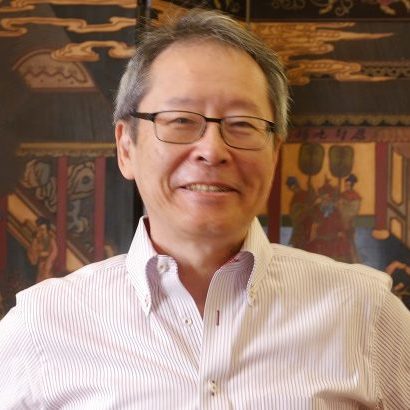
Haruo Shirane

Haruo Shirane

Shincho Professor of Japanese Literature, Vice Chair of the Department of East Asian Languages and Cultures, Faculty Director of the Donald Keene Center

Office: 420 Kent Hall
Office Hours: On leave for the 2025-2026 academic year
Phone: (212) 854-5031
Email: hs14@columbia.edu

Educational Background

BA: Columbia College (’74)
MA: University of Michigan (’77)
PhD: Columbia University (’83)

Classes Taught

JPNS GU4007 Introduction to Classical Japanese
JPNS GR8040 Graduate Seminar in Premodern Japanese Literature

Research Interests

Japanese Literature, Print Culture, Performance and Media

Haruo Shirane, Shincho Professor of Japanese Literature and Culture and chair of the Department of East Asian Languages and Cultures at Columbia University, teaches and writes on premodern and early modern Japanese literature and culture, with particular interest in prose fiction, poetry, performative genres (such as storytelling and theater), and visual culture. He is finishing a book called Media, Performance, and Play: Japanese Culture from Outside In, which focuses on the role of manuscript culture, media, vocality, and performance, viewing cultural processes from the social periphery. Japan and the Culture of the Four Seasons (Columbia University Press, 2012) explored the cultural constructions of nature across a wide spectrum of literature, media, and visual arts from the ancient period to the modern. Most recently, he has coedited Monsters, Animals, and Other Worlds: A Collection of Short Medieval Tales (Columbia University Press, 2018); Reading The Tale of Genji: The First Millennium(Columbia University Press, 2015); and Cambridge History of Japanese Literature (Cambridge University Press, 2015).

Haruo Shirane has been engaged in bringing new approaches to the study of Japanese literary culture. This has resulted in Japanese Literature and Literary Theory (Nihon bungaku kara no hihyo riron, Kasama shoin, 2009, edited with Fujii Sadakazu and Matsui Kenji) and New Horizons in Japanese Literary Studies (Bensei Publishing, 2009), both of which explore new issues and methodologies in the study of print and literary culture. He also edited Food in Japanese Literature (Shibundo, 2008), Overseas Studies on The Tale of Genji (Ofu, 2008) and Envisioning The Tale of Genji: Media, Gender, and Cultural Production (Columbia University Press, 2008). The latter two books analyze the impact of The Tale of Genji on Japanese cultural history in multiple genres and historical periods.

Haruo Shirane translated and edited a number of volumes on Japanese literature. These include Classical Japanese Literature, An Anthology: Beginnings to 1600 (Columbia University Press, 2006), Early Modern Japanese Literature: An Anthology, 1600-1900 (Columbia University Press, 2002; abridged edition, 2008), The Tales of the Heike (Columbia University Press, 2006, paperback 2008), and The Demon at Agi Bridge and Other Japanese Tales (Columbia University Press, 2010), a collection of setsuwa (anecdotal literature).

He is also deeply involved with the history of Japanese language and pedagogical needs and have written Classical Japanese Reader and Essential Dictionary (2007) and Classical Japanese: A Grammar (Columbia University Press, 2005).

Haruo Shirane is the recipient of Fulbright, Japan Foundation, SSRC, NEH, and Hakuhodo grants, and has been awarded the Kadokawa Genyoshi Prize, Ishida Hakyo Prize, and most recently the Ueno Satsuki Memorial prize (2010) for outstanding research on Japanese culture. He is presently the Chair of the Department of East Asian Languages and Cultures.

Professor’s Shirane’s personal website

Selected Publications

Cambridge History of Japanese Literature (chief editor, Cambridge, 2015)

Japan and the Culture of the Four Seasons (Columbia, 2012)

Inventing the Classics: Modernity, National Identity, and Japanese Literature (co-editor with Tomi Suzuki, 2001).

Traces of Dreams: Landscape, Cultural Memory, and the Poetry of Bashô (Stanford, 1998)

The Bridge of Dreams: A Poetics of the Tale of Genji (Stanford, 1987)

Wei Shang

Wei Shang

Du Family Professor of Chinese Culture

Office: 404 Kent Hall
Office Hours: TBD
Phone: (212) 854-1526
Email: ws110@columbia.edu

Educational Background

BA: Peking University (’82)
MA: Peking University (’84)
PhD: Harvard University (’95)

Classes Taught

AHUM UN1400 Colloquium on Major Texts: East Asia
CHNS GU4507 Readings in Classical Chinese
EAAS GR8030 Pre-Modern Chinese Fiction

Research Interests

Pre-modern Chinese Literature, Cultural and Intellectual History with special attention to Fiction and Drama of the Ming and Qing dynasties (1368-1911).

Professor Wei Shang specializes in pre-modern Chinese literature and culture, especially the fiction and drama of the Ming and Qing dynasties. His research interests also include print culture, book history and intellectual history of the same period. His book “Rulin Waishi” and Cultural Transformation in Late Imperial China (2003) addresses the role of Confucian ritualism and fiction in shaping the intellectual and cultural changes of the eighteenth century. His other publications are concerned with Jin Ping Mei Cihua (The Plum in the Golden Vase), late Ming culture, fiction commentary, and medieval poetry, including Writing on Landmarks: From Yellow Crane Tower to Phoenix Pavilion (2020). He is the editor and co-editor of several volumes in both English and Chinese, and a contributor to The Cambridge History of Chinese Literature (2010).

Selected Publications

Books:

Rulin Waishi and Cultural Transformation in Late Imperial China. Harvard University Asian Center, 2003.

Writing on Landmarks: From Yellow Crane Tower to Phoenix Pavilion (Tixie mingsheng: cong huanghe lou dao fenghuang tai). Beijing: Sanlian Publishing House, 2020.

Old-Style Prose: An Annotated Anthology for Young Readers (Gei haizi de guwen). Beijing: Moveable Type, 2019.

Dynastic Crisis and Cultural Innovation: From the Late Ming to the Late Qing and Beyond (co-edited with David Der-wei Wang). Harvard University Asian Center, 2005.

A special issue of Journal of Chinese Literature and Culture: Literature and Visual Culture in Early Modern China (co-edited with Xingpei Yuan), Duke University Press, 2015.

Articles:

“Fictional Performances: Royal Birthday Ceremonies and the Self-Imagination of the Empire in Yesou puyan”. Literary Heritage (Wenxue yichan), no. 3, 2017: 155-167.

“The Formation of a Poly-textual Novel:  From The Water Margin to The Plum in the Golden Vase”. The Journal of Fudan University, no. 5, 2016: 31-58.

“A Lively Illusion: Occidental Lens, Linear Perspective, and the Phantom of the Grand Prospect Garden” (I, II, III). Studies of Cao Xueqin (Cao Xueqin yanjiu), no. 1, 2, 3, 2016: 95-117 (I); 103-123 (II); (38-62 (III).

“Truth Becomes Fiction When Fiction is True: The Story of the Stone and the Visual Culture of the Manchu Court”.  A special issue of Journal of Chinese Literature and Culture: Literature and Visual Culture in Early Modern China, October 2015: 207-248.

“Writing and Speech: Rethinking the Issue of Vernaculars in Early Modern China”, Rethinking East Asian Languages, Vernaculars, and Literacies, 1000-1919 (edited by Benjamin Elman). Brill: Leiden/Boston, 2014: 254-301.

Ying Qian

ying_qianYing Qian

Associate Professor

Office: 930 IAB
Office Hours: F 4 PM-6 PM, Appointment required

Phone: (212)854-5027
Email: yq2189@columbia.edu

Educational Background

AB: Harvard University
MPhil: University of Cambridge, UK
PhD: Harvard University (’13)

Classes Taught

EAAS UN3322 East Asian Cinema
EAAS GU4572 Chinese Documentary Cinema
EAAS GR8998 Media Cultures in China

Research Interests

Chinese-language cinema and media; transnational media histories; media of activism, reform and critique; media ecology and knowledge formation

As a scholar of cinema and media, Ying Qian is interested in the role of media
and mediation in shaping politics, forming knowledge, and connecting realms
of experience. Her first book, Revolutionary Becomings: Documentary Media
in Twentieth-Century China (Columbia University Press, 2024) excavates
documentary’s multi-faceted productivities in China’s revolutionary
movements, from the toppling of the Qing Empire in 1911 to the political
campaigns and mass protests in the Mao and post-Mao eras. It approaches
documentary as an “eventful medium,” and as a prism to examine the mutual
constitution of media and revolution: how revolutionary movements gave
rise to specific media practices, and how these media practices in turn
contributed to the specific paths of revolution’s actualization. This book has
won the Lionel Trilling Book Award from Columbia College, and the best
book in journalism history award from the Association for Education in
Journalism and Mass Communication (AEJMC). Ying Qian’s articles have
appeared in positions: asia critique, Critical Inquiry, New Left Review, China
Perspectives, New Literary History of Modern China, Oxford Handbook of
Chinese Cinemas, and other journals and websites. She is also the co-editor
(with Nicholas Bartlett) of a special issue, Neng 能and China’s Long 1980s
(positions: asia critique, 33.3 August 2025). At Columbia, she teaches classes
on East Asian cinema, Chinese media cultures, documentary media, media of
science and technology, and comparative media theory and history. Drawing
from her experiences in filmmaking, she has incorporated creative
assignments in her classes, guiding students to try their hands on media
productions.

Selected Publications

“The Rise of the Brain: Envisioning Human Potential in 1980s China” (single-authored), and
“Neng and China’s 1980s: a Reevaluation” (co-authored with Nicholas Bartlett), in Nicholas Bartlett and Ying Qian eds., Neng 能 and China’s Long 1980s (special issue), 
positions: asia critique v. 33, no. 3, August 2025.

Revolutionary Becomings: Documentary Media in Twentieth-Century China (Columbia
University Press, 2024)

“When Taylorism Met Revolutionary Romanticism: Documentary Cinema in China’s Great Leap
Forward”, Critical Inquiry (Spring 2020).

“The Spectre of Liu Shaoqi,” in A New Literary History of Modern China (Harvard, 2017)
“Working with Rubble: Montage, Tweets, and the Reconstruction of an Activist Cinema,”
in China’s iGeneration: Filmmakers, Films and Audiences in a New Media Age (Continuum,
2014)

“Power in the Frame: Independent Documentary in China,” The New Left Review (2012)

  • « Go to Previous Page
  • Go to page 1
  • Go to page 2
  • Go to page 3
  • Go to page 4
  • Go to Next Page »

Before Footer

EALAC – Columbia University
407 Kent Hall 1140 Amsterdam Ave.
MC 3907  New York, NY 10027
tel:212.854.5027

Footer

  • Facebook
  • Instagram
  • Twitter
  • ABOUT
  • PEOPLE
  • PROGRAMS
  • EVENTS
  • SUPPORT

Copyright © 2026 · Columbia University Department of East Asian Languages and Cultures

Copyright © 2026 · EALAC on Genesis Framework · WordPress · Log in