• Skip to main content
  • Skip to footer

  • ABOUT
    • Greetings from the Department Chair
    • Department History
    • News
    • Affiliates
    • Support
    • Contact EALAC
  • PEOPLE
    • Faculty
    • Administration
    • Graduate Students
    • Recent Alumni
  • PROGRAMS
    • Undergraduate
    • Graduate
    • Language Programs
    • Academic Year 2025-2026 Courses
  • EVENTS
  • SUPPORT

Early Modern

Haruo Shirane

Haruo Shirane
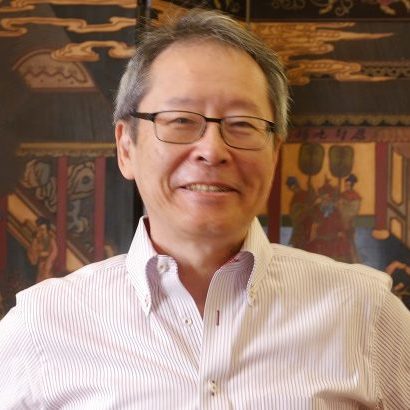
Shincho Professor of Japanese Literature, Vice Chair of the Department of East Asian Languages and Cultures, Faculty Director of the Donald Keene Center

Office: 420 Kent Hall
Office Hours: On leave for the 2026-2027 academic year
Phone: (212) 854-5031
Email: hs14@columbia.edu

Educational Background

BA: Columbia College (’74)
MA: University of Michigan (’77)
PhD: Columbia University (’83)

Classes Taught

JPNS GU4007 Introduction to Classical Japanese
JPNS GR8040 Graduate Seminar in Premodern Japanese Literature

Research Interests

Japanese Literature, Print Culture, Performance and Media

Haruo Shirane, Shincho Professor of Japanese Literature and Culture and chair of the Department of East Asian Languages and Cultures at Columbia University, teaches and writes on premodern and early modern Japanese literature and culture, with particular interest in prose fiction, poetry, performative genres (such as storytelling and theater), and visual culture. He is finishing a book called Media, Performance, and Play: Japanese Culture from Outside In, which focuses on the role of manuscript culture, media, vocality, and performance, viewing cultural processes from the social periphery. Japan and the Culture of the Four Seasons (Columbia University Press, 2012) explored the cultural constructions of nature across a wide spectrum of literature, media, and visual arts from the ancient period to the modern. Most recently, he has coedited Monsters, Animals, and Other Worlds: A Collection of Short Medieval Tales (Columbia University Press, 2018); Reading The Tale of Genji: The First Millennium(Columbia University Press, 2015); and Cambridge History of Japanese Literature (Cambridge University Press, 2015).

Haruo Shirane has been engaged in bringing new approaches to the study of Japanese literary culture. This has resulted in Japanese Literature and Literary Theory (Nihon bungaku kara no hihyo riron, Kasama shoin, 2009, edited with Fujii Sadakazu and Matsui Kenji) and New Horizons in Japanese Literary Studies (Bensei Publishing, 2009), both of which explore new issues and methodologies in the study of print and literary culture. He also edited Food in Japanese Literature (Shibundo, 2008), Overseas Studies on The Tale of Genji (Ofu, 2008) and Envisioning The Tale of Genji: Media, Gender, and Cultural Production (Columbia University Press, 2008). The latter two books analyze the impact of The Tale of Genji on Japanese cultural history in multiple genres and historical periods.

Haruo Shirane translated and edited a number of volumes on Japanese literature. These include Classical Japanese Literature, An Anthology: Beginnings to 1600 (Columbia University Press, 2006), Early Modern Japanese Literature: An Anthology, 1600-1900 (Columbia University Press, 2002; abridged edition, 2008), The Tales of the Heike (Columbia University Press, 2006, paperback 2008), and The Demon at Agi Bridge and Other Japanese Tales (Columbia University Press, 2010), a collection of setsuwa (anecdotal literature).

He is also deeply involved with the history of Japanese language and pedagogical needs and have written Classical Japanese Reader and Essential Dictionary (2007) and Classical Japanese: A Grammar (Columbia University Press, 2005).

Haruo Shirane is the recipient of Fulbright, Japan Foundation, SSRC, NEH, and Hakuhodo grants, and has been awarded the Kadokawa Genyoshi Prize, Ishida Hakyo Prize, and most recently the Ueno Satsuki Memorial prize (2010) for outstanding research on Japanese culture. He is presently the Chair of the Department of East Asian Languages and Cultures.

Professor’s Shirane’s personal website

Selected Publications

Cambridge History of Japanese Literature (chief editor, Cambridge, 2015)

Japan and the Culture of the Four Seasons (Columbia, 2012)

Inventing the Classics: Modernity, National Identity, and Japanese Literature (co-editor with Tomi Suzuki, 2001).

Traces of Dreams: Landscape, Cultural Memory, and the Poetry of Bashô (Stanford, 1998)

The Bridge of Dreams: A Poetics of the Tale of Genji (Stanford, 1987)

Wei Shang

Wei Shang

Du Family Professor of Chinese Culture

Office: 404 Kent Hall
Office Hours: TBD
Phone: (212) 854-1526
Email: ws110@columbia.edu

Educational Background

BA: Peking University (’82)
MA: Peking University (’84)
PhD: Harvard University (’95)

Classes Taught

AHUM UN1400 Colloquium on Major Texts: East Asia
CHNS GU4507 Readings in Classical Chinese
EAAS GR8030 Pre-Modern Chinese Fiction

Research Interests

Pre-modern Chinese Literature, Cultural and Intellectual History with special attention to Fiction and Drama of the Ming and Qing dynasties (1368-1911).

Professor Wei Shang specializes in pre-modern Chinese literature and culture, especially the fiction and drama of the Ming and Qing dynasties. His research interests also include print culture, book history and intellectual history of the same period. His book “Rulin Waishi” and Cultural Transformation in Late Imperial China (2003) addresses the role of Confucian ritualism and fiction in shaping the intellectual and cultural changes of the eighteenth century. His other publications are concerned with Jin Ping Mei Cihua (The Plum in the Golden Vase), late Ming culture, fiction commentary, and medieval poetry, including Writing on Landmarks: From Yellow Crane Tower to Phoenix Pavilion (2020). He is the editor and co-editor of several volumes in both English and Chinese, and a contributor to The Cambridge History of Chinese Literature (2010).

Selected Publications

Books:

江山勝跡:人文風景的建構與傳承 Cultural Landscape: Its Construction and Transformation, co-edited with Xiao Han. Beijing University Press, 2025, 299 pages.

Rulin Waishi and Cultural Transformation in Late Imperial China. Harvard University Asian Center, 2003.

Writing on Landmarks: From Yellow Crane Tower to Phoenix Pavilion (Tixie mingsheng: cong huanghe lou dao fenghuang tai). Beijing: Sanlian Publishing House, 2020.

Old-Style Prose: An Annotated Anthology for Young Readers (Gei haizi de guwen). Beijing: Moveable Type, 2019.

Dynastic Crisis and Cultural Innovation: From the Late Ming to the Late Qing and Beyond (co-edited with David Der-wei Wang). Harvard University Asian Center, 2005.

A special issue of Journal of Chinese Literature and Culture: Literature and Visual Culture in Early Modern China (co-edited with Xingpei Yuan), Duke University Press, 2015.

Articles:

 “Theatrical Performance and Spectatorship in Dramatic Sanqu Writings Modeled on Zaban: From “The Country Pumpkin Knows Naught of the Theater” to “Gaozu Returns to His Hometown”, in Literature & Art Studies 文藝研究, 2025 (5): 5-37.

“Reflecting on the May-Fourth ‘Vernacularization Movement’: Discourse, Practice, and Historical Significance.” 國際漢學研究通訊 Newsletter for International China Studies, 2024 (28): 3-99.

“A Place Made Well Known by a Poem: Ji (跡)and Wen (文)in Landscape Poetry.” The Journal of Peking University, 2023 (5): 99-112.

“The Emergence of the Novel: From Outlaws of the Marsh to The Plum in the Golden Vase.” Approaches to Teaching The Plum in the Golden Vase (ed., Andrew Schonebaum). Modern Language Association of America, New York, 2022, pp. 310-327.

“Para-text and Narrative Time of Rulin Waishi.” Wenxue yichan 文學遺產 (Literary Heritage), 2021 (6): 4-16.

“On Rulin Waishi‘s Original Edition and Other Related Issues.” Gudian wenxue qianyan yu pinglun 古典文學前沿與評論 (Frontiers and Review of the Classical Chinese Literary Study), 2021 (2): 199-220.

A review article: “Toward a Theory of Traditional Chinese Theater and Performance Arts: A Review of A Remarkable Game: What is so Great about Peking Opera.” Wenyi yanjiu 文藝研究 (Literature and Art Studies), 2022 (4): 151-164.

“Fictional Performances: Royal Birthday Ceremonies and the Self-Imagination of the Empire in Yesou puyan”. Literary Heritage (Wenxue yichan), no. 3, 2017: 155-167.

“The Formation of a Poly-textual Novel:  From The Water Margin to The Plum in the Golden Vase”. The Journal of Fudan University, no. 5, 2016: 31-58.

“A Lively Illusion: Occidental Lens, Linear Perspective, and the Phantom of the Grand Prospect Garden” (I, II, III). Studies of Cao Xueqin (Cao Xueqin yanjiu), no. 1, 2, 3, 2016: 95-117 (I); 103-123 (II); 38-62 (III).

“Truth Becomes Fiction When Fiction is True: The Story of the Stone and the Visual Culture of the Manchu Court”.  A special issue of Journal of Chinese Literature and Culture: Literature and Visual Culture in Early Modern China, October 2015: 207-248.

“Writing and Speech: Rethinking the Issue of Vernaculars in Early Modern China”, Rethinking East Asian Languages, Vernaculars, and Literacies, 1000-1919 (edited by Benjamin Elman). Brill: Leiden/Boston, 2014: 254-301.

John Phan

John Phan

Associate Professor of Vietnamese Humanities

Office: 620 Kent Hall

Office Hours: Thursdays, 2-4pm

Phone: (212) 854-5744
Email: jp3720@columbia.edu

Educational Background

BA: Saint Olaf College (’02)
MA: Columbia University (’05)
PhD: Cornell University (’12)

Classes Taught

ASCE UN1367 Introduction to East Asian Civilizations: Vietnam
AHUM UN1400 Colloquium on Major Texts: East Asia
EAAS 8630 Braided Languages: Diglossia and Cosmopolitanism in Premodern Vietnam
EAAS GU4412 History of Writing in a Cosmopolitan East Asia
EAAS UN3710 Fiction & Film in the Making of Modern Vietnams
HSEA GR6300 Vietnamese Studies: Historiography & Methodology

Research Interests

Language as an historical record, Language ethics through time, Translation, Vietnamese
Writing Systems and Vernacular Scripts, Historical Linguistics, Linguistic Contact
between China and Vietnam


John Phan is a language historian focused on the ways in which the history of spoken
language, literary language, and writing systems can reveal social, cultural and political
realities of the premodern and early modern worlds. His first book, entitled Lost Tongues
of the Red River: Annamese Middle Chinese & the Origins of the Vietnames Language,
focuses on the history of Sino-Vietic linguistic contact, and is forthcoming from Harvard
Asia Center Press. His second project focuses on the vernacularization of early modern
Vietnamese society, as exemplified by a vigorous practice of translation from Literary
Sinitic into vernacular Vietnamese over the 17th -18th centuries, amidst the sociopolitical
regionalization of that period. In addition to the nature of linguistic contact, and broad
issues in linguistic change and historical phonology as they pertain to broader historical
issues, he is keenly interested in the cultural and intellectual ramifications of multiple
languages coexisting in single East Asian societies, of linguistic pluralism in general, and
of the transformation of oral languages into written literary mediums in historically
diglossic cultures of East and Southeast Asia.

For a complete list of publications, please visit his personal website.

Selected Publications
“Sesquisyllabicity,  Chữ Nôm, and the Early Modern embrace of vernacular writing in Vietnam.” In Journal of Chinese Writing Systems, Online First advance version (2020), pp. 1-14.
“Vietnamese Lexicographic Practices in the 19th and 20th Centuries.” The Cambridge World History of Lexicography (2019). Edited by John Considine. Cambridge University Press, pp. 356-365.
“The 20th Century Secularization of the Sinograph in Vietnam, and its Demotion from the Cosmological to the Aesthetic,” Journal of World Literature (2016)

“Rebooting the Vernacular in 17th Century Vietnam,” in Rethinking East Asian Languages, Vernaculars, and Literacies, 1000-1919 (Brill, 2014)

“Chữ Nôm and the Taming of the South: A Bilingual Defense for Vernacular Writing in the Chỉ Nam Ngọc Âm Giải Nghĩa,” The Journal of Vietnamese Studies (2013)

  • « Go to Previous Page
  • Go to page 1
  • Go to page 2
  • Go to page 3
  • Go to Next Page »

Before Footer

EALAC – Columbia University
407 Kent Hall 1140 Amsterdam Ave.
MC 3907  New York, NY 10027
tel:212.854.5027

Footer

  • Facebook
  • Instagram
  • Twitter
  • ABOUT
  • PEOPLE
  • PROGRAMS
  • EVENTS
  • SUPPORT

Copyright © 2026 · Columbia University Department of East Asian Languages and Cultures

Copyright © 2026 · EALAC on Genesis Framework · WordPress · Log in