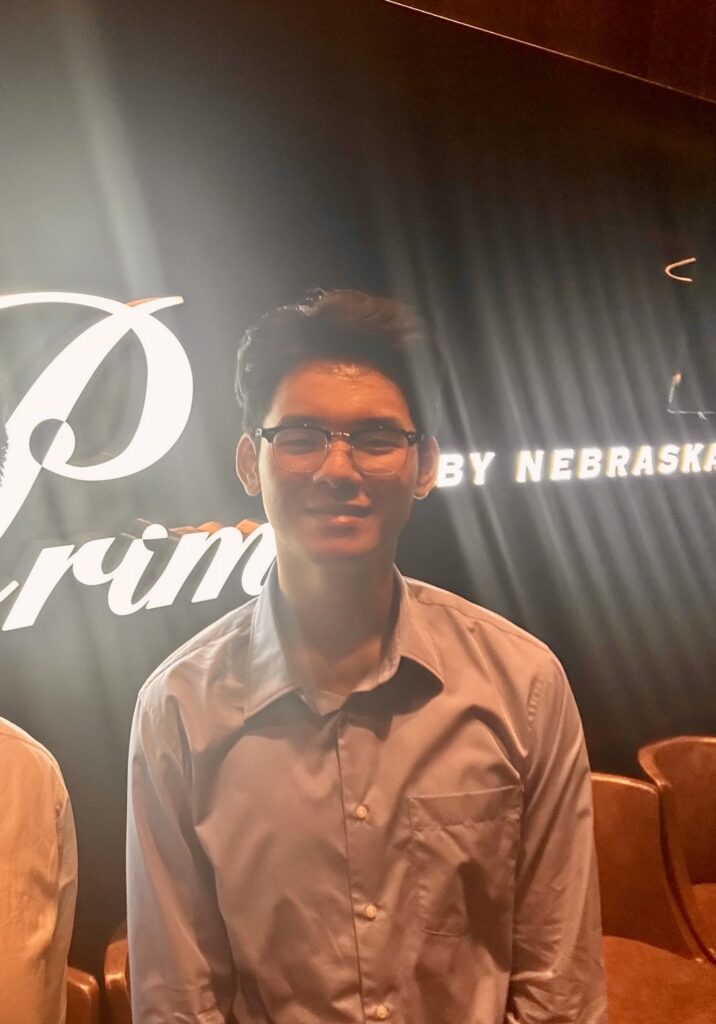
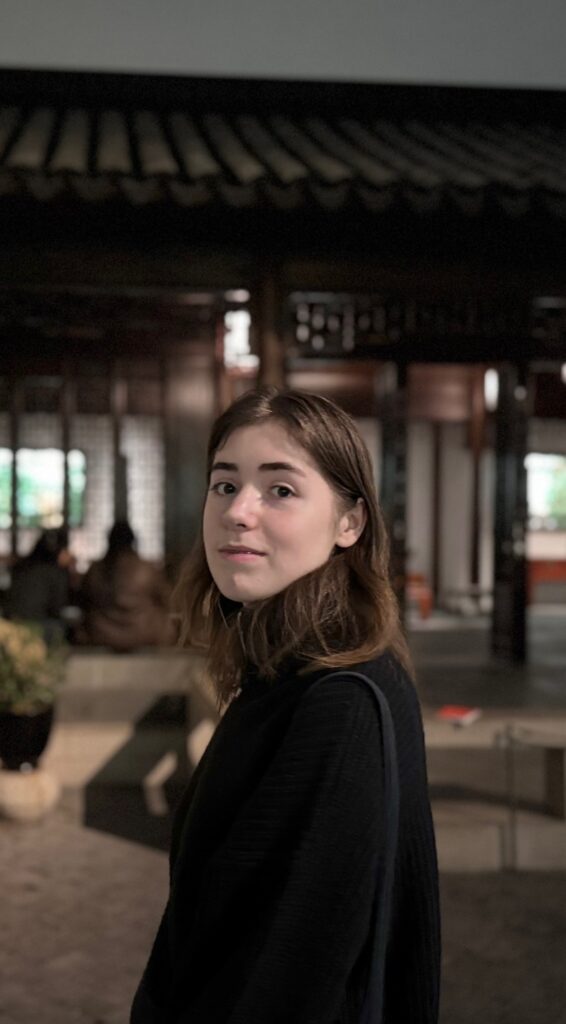
• Skip to main content
  • Skip to footer

  • ABOUT
    • Greetings from the Department Chair
    • Department History
    • News
    • Affiliates
    • Support
    • Contact EALAC
  • PEOPLE
    • Faculty
    • Administration
    • Graduate Students
    • Recent Alumni
  • PROGRAMS
    • Undergraduate
    • Graduate
    • Language Programs
    • Academic Year 2025-2026 Courses
  • EVENTS
  • SUPPORT

undergraduate-students

Congratulations to our 2025-26 EALAC Senior Thesis Writers!

Please join us in congratulating our 2025-26 Senior Thesis writers for all of their hard work and efforts in the Senior Thesis Program! These undergraduate students did an outstanding job and will receive the Oscar Lee Award for Senior Thesis Writers for their achievements.
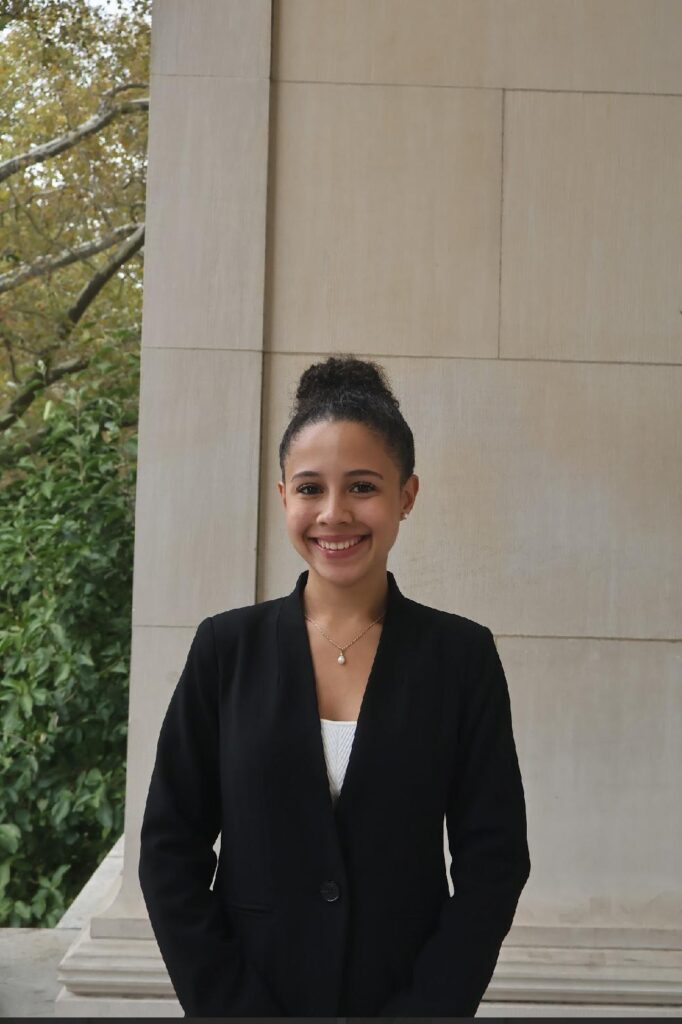
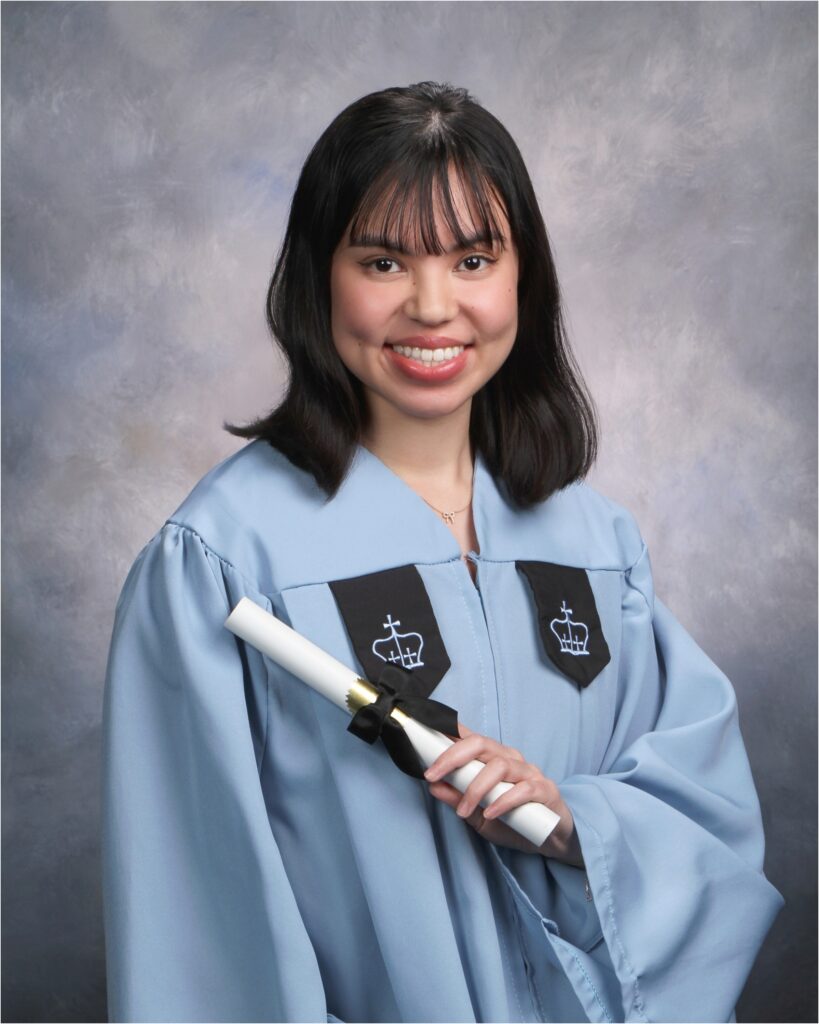
Alexis Alton, CC ’26

Bio: Alexis Alton is a member of the Columbia College Class of 2026, majoring in East Asian Studies with a minor in Science & Society. Her areas of interest are twentieth and twenty-first century Chinese culture, with a focus on visual culture, media, and women’s studies. Her senior thesis – entitled French Braids, Rosy Cheeks, and Succulent Fruit: Addressing Chinese Propaganda Poster Representations of Nature and Female Figures During the Great Leap Forward – focuses on Great Leap Forward propaganda poster representations of the relationship between nature and women and girls. Outside of the classroom, she enjoys theater, reading, creative writing, and spending time with her goldendoodle puppy Coco de Chanel. After graduation, Alexis plans to pursue graduate studies.

Abstract: This thesis addresses how Great Leap Forward propaganda posters mediate the relationship between female subjects and nature in line with the theoretical framework of ecofeminism. This thesis highlights how these posters work to produce a cultural vision of femininity, productivity, and gendered national identity. Employing a curatorial approach and using visual analysis, this thesis analyzes how specific visual and caption choices imbue these posters with prescriptive messaging, shaping the cultural role of women and girls.

By making use of representations of cotton, produce, and flowers, this thesis explains how propaganda posters shape the role of women and girls during the Great Leap Forward. Through an analysis of cotton-centric posters, this thesis presents how women’s and girl’s engagement with labor emerges alongside notions of national duty, individuality, happiness, and play. The discussion of food provides an entry point for this thesis to examine idealized images of childhood and health as well as the idea of women as beings with productive and reproductive value. Flowers serve as a mechanism for assessing urban women’s relationship to nature by showcasing women’s contributions to the Great Leap Forward outside of the fields and productive labor. This thesis closes by illustrating the continued cultural relevance of this dynamic through a discussion of how this gendered relationship to nature manifests in contemporary China.

This thesis argues that propaganda posters featuring women/girls and/in nature shape a specific idealized vision of female subjects and nature to drive development in line with China’s socialist agenda. This thesis unpacks this close connection between China’s gender progress and productive priorities, arguing that these posters address the productive, reproductive, and intrinsic value of female subjects as well as the significance of female contributions to the aims of the Great Leap Forward, ushering in a sense of gendered nationalism and a new cultural era for female actors.


Isabel Andreatta, CC ’26

Bio: Isabel Andreatta is a member of the Columbia College Class of 2026 majoring in East Asian Studies. Her area of research interest centers on visual and popular media in interwar Imperial Japan, focusing on how institutional forces and consumer culture mediated questions of modernity, power, and subjectivity. Outside of her studies, she enjoys going to the cinema, sifting through second-hand bookstores, and learning about the natural world. After graduation, she hopes to continue her research by pursuing a career in academia. Isabel’s senior thesis, written under the guidance of Professor Takuya Tsunoda, is an exploration of both space as a scholarly inquiry and of Asakusa’s entertainment culture from 1914 to 1923. By centering media objects—travel guides, maps, postcards, magazines, and ephemera—her thesis traces the relationship between theater, opera, and film and the socio-material construction of Asakusa’s identity within Asakusa and broader Tokyo. 

Thesis Title: Frames of the Moving City: Urban Visuality and the Making of Asakusa, 1914–1923

Abstract: Leisurely, pensively, and impassioned by curiosity, the flâneur, more than a corporeal man, is a mode of seeing and circulating through the cacophony of the modern cityscape. And as aptly put by Scott McCracken in “The Completion of Old Work: Walter Benjamin and the Everyday,” it is “the material culture of the city, rather than the psyche, [that] provides the shared collective spaces where consciousness and the unconscious, past and present, meet. As such, this thesis seeks to understand Tokyo’s Asakusa district as a modern entertainment space from 1914 to the eve of the 1923 Kantō Earthquake, turning to the visual regime—that is, the visualscape mediated by the spatial order and material construction of space—as a starting point of my analysis. However, departing from the one-directional, subjective gaze of the flâneur, this thesis understands urban space through the lens of social networks—defined by relations, influence, structure, and movement. Doing so provokes questions beyond what is Asakusa? and what images are associated with Asakusa? to questions like who is staging Asakusa and how? By analyzing the institutional media practices of theater companies, movie studios, and other corporations involved in the entertainment industry, this thesis ultimately seeks to achieve three primary goals: i) identify the projected relationship between consumers and producers of Asakusa entertainment; ii) locate and characterize the networks of entertainment institutions; and iii) understand how the projected relationship and real power structures work together to reconfigure understandings and experiences of Asakusa as a space.
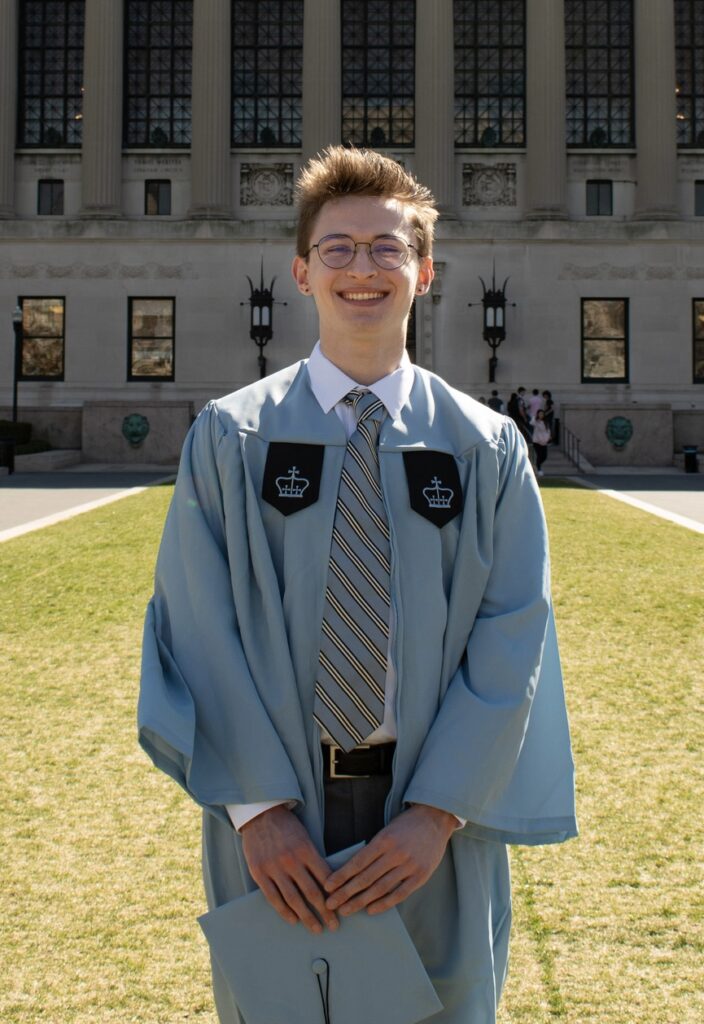

Lot Bates, CC ’26

Bio: I am a member of the Columbia College class of 2026, majoring in East Asian Studies with a concentration in Computer Science. I have been learning mandarin since I was 4 years old, and have developed an interest in Taiwanese literature and history after studying in Taipei for a summer. Some of my favorite classes were “East Asian Cinema” taught by Professor Ying Qian, “Computational Sound” taught by Professor Mark Santolucito, and “Labor and Love in Modern China” taught by my faculty advisor, Professor Nicholas Bartlett. Outside of the classroom, I play the cello in various classical music ensembles and am interested in public transportation networks, minecraft, and cats. After graduation, I plan on returning home to Boston to look for opportunities in computer science, classical music performance, and east asian studies in hopes of gaining a deeper understanding of what career path I want to pursue.

My senior thesis “Infrastructure and Identity: Rail Transit and the Literary Imagination of Taiwan” melds my academic interests with my personal fascination regarding public transportation and urban studies by analyzing the way in which rail transportation shaped Taiwan’s historical development. I use literature as my main mode of analysis to understand the human experience of rail travel rather than observing rail transit as a lifeless historical artifact.

Abstract: What does it mean to be Taiwanese? The question resists easy answers. Taiwan is a place that has been named, claimed, and remade by successive powers across centuries. It is a region whose residents have been told, repeatedly and by force, who they are and what language they must speak to prove it. Out of this history of serial colonization emerges a question not only of political sovereignty but of something more intimate: the question of what, if anything, connects a people to the land they inhabit, and whether that connection can survive the weight of so many imposed reinventions.

This thesis examines rail infrastructure as one of the central material sites in which that question is negotiated. Drawing on three literary texts—Yang Shuangzi’s Taiwan Travelogue, Huang Chunming’s “Sayonara/Zaijian,” and Zhu Tianxin’s The Old Capital—I argue that Taiwan’s rail network functions as a material archive of the island’s contested history, one in which the legacies of colonial rule, authoritarian governance, and democratic aspiration are simultaneously encoded into the landscape. Rather than serving as a neutral medium of connection, rail infrastructure in Taiwan has consistently organized relationships between center and periphery, visibility and invisibility, memory and forgetting.

Each literary text illuminates a distinct dimension of this argument. Taiwan Travelogue reveals the colonial railway as a frame that structures and limits the colonizer’s perception of the occupied land, enabling a form of consumption that reproduces imperial extraction even as it disavows it. “Sayonara/Zaijian” traces the colonial railway’s postwar afterlife in the economy of Japanese sex tourism, where the train carves out a liminal space for historical confrontation while foreclosing resolution. The Old Capital presents the Taipei Mass Rapid Transit (MRT) as a democratic instrument of urban erasure. The MRT embodies an infrastructure that promises modernity while systematically destroying the spatial conditions of memory and collective belonging.

Taken together, these texts propose that decolonization in Taiwan remains incomplete not only at the level of political sovereignty but at the level of built space. True decolonization requires not only political transformation but infrastructural reimagination: a rethinking of whose memories count, whose routes matter, and whose vision of the island is reflected in the network’s design.
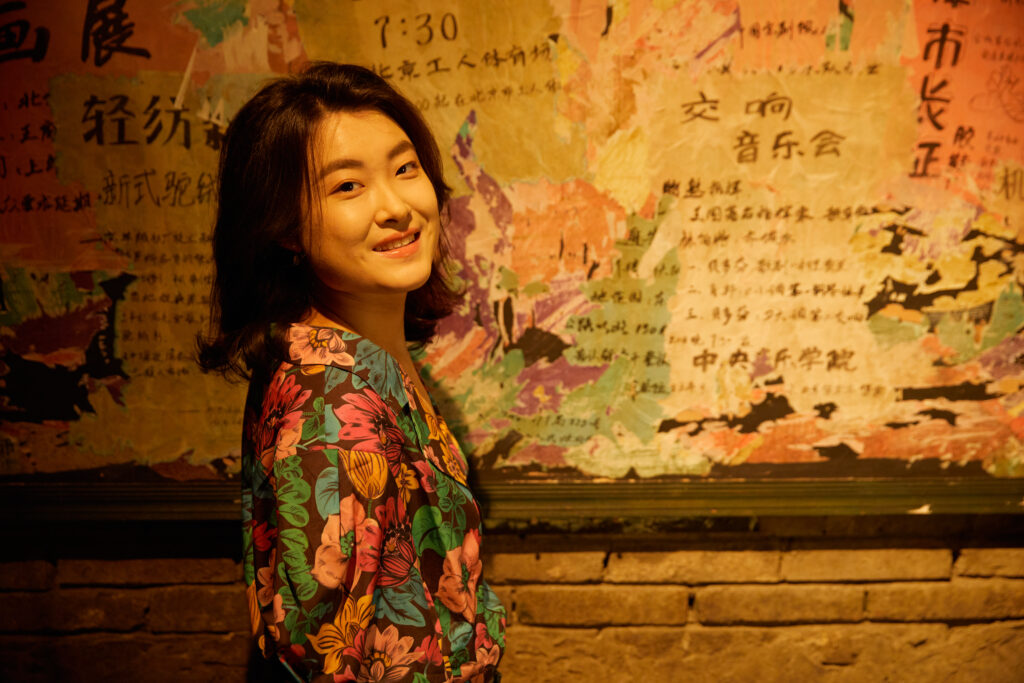

Julie Chen, CC ’26

Bio: Julie Chen is a graduating senior with double majors in East Asian Studies and Comparative Literature & Society. Her EALAC senior thesis investigates island narratives and attendant issues of spatial-political legitimation, symbolic control of gender, and literati self-identification in early modern Chinese novels (Zhanghui xiaoshuo). Her comparative literature thesis works on the configuration of fungal knowledge and epistemological alterities in Chinese writings through the lens of sinographs, semantics, and translation. She has been the recipient of Columbia’s IRCPL summer research fellowship, academic editor of Columbia Journal of Asia, and the student representative on the Committee of Global Core. 

Abstract: In my thesis, I foreground “islands” as a spatial lens to investigate the dynamics of male literati self-identification at critical historical junctures by analyzing three early modern Chinese “fictions” (zhanghui xiaoshuo 章回小說): Shuihu houzhuan 水滸後傳, a sequel to Water Margin composed by a Ming loyalist literati Chen Chen 陳忱 (1615-1670) during the Ming-Qing transition, the mid-Qing literati/erudition novel Jinghua yuan 鏡花緣 (“Flowers in the Mirror”) by Li Ruzhen 李汝珍 (1763-1830), and the late Qing fiction of reformation and reverse-colonization Chiren shuomeng ji 痴人說夢記 (“Tale of Dream by an Enchanted Person”) written by a relatively obscure author pen-named Lu Sheng 旅生 (?). By close reading the authors’ mediation of alternative space and critically engaging with theoretical concepts of spatial alterities such as “utopia,” “heterotopia,” and “dystopia,” I showcase both how the literary cartographies of overseas islands in the three works of fiction bespeak forms of literati dis-enchantment and re-identification with the empire, as well as the dialectical, ambiguous tension between the two affective poles, as grounded in their respective historical contexts. Another justification for pairing the three fictions stems from their shared adaptation of narratological paradigms such as the vernacular models found in Water Margin and relevant Shanhai jing and Tang chuanqi precedents. From this intertextual perspective, I propose that “islands” can serve as an effective analytical prism for tracing the genealogy of late imperial vernacular narrative modalities, alongside psychological trajectories of the narrating literati. I conclude that while Shuihu houzhuan reflects Chen Chen’s complex and at times self-contradictory negotiation with the Ming dynastic collapse when the overseas islands are turned into a site of both disenchantment and re-identification, Jinghua yuan exemplifies the mid-Qing literati’s self-reflexive celebration and satirization of “this Culture of Ours” that entertains literati erudition and transgressive fantasies in staging the tour of islands. Continuing these textual precedents which refract literati anxiety and blur the boundary between “inside” and “outside,” Chiren shuomeng ji reflects late Qing discourse which sought to cope with China’s national crisis in the face of Western colonial powers by writing a catharsis narrative that reverses the propagated evolutionary theories and racial hierarchy. Together with other peculiar enclaves in late Qing imaginaries, the reformed and “civilized” island in Chiren shuomeng ji becomes an independent yet communicable base in the open sea that claims a superior civilizational position, while symbolically enmeshing the multiple temporalities of China’s past, present, and future into its imaginative space. By conceptualizing the oscillation between utopian and dystopian impulses in these island narratives by early modern Chinese literati, I experiment with the usefulness and potential inadequacies of the theoretical lens of “heterotopia.” By adopting the term “heterotopia,” I borrow its concept from Foucault’s original context of real, social, and institutional sites and apply it to textual forms of such sites. I aim to emphasize at once the embeddedness of those peculiar enclaves within the empire’s larger normative structures and the imagined islands’ subversiveness in cracking crevices out of cultural monoliths and dominant ideologies. This attempt is intended to be in conversation with previous “utopian” frameworks that primarily emphasize the alternative space as sites of disengagement and new possibilities, potentially overlooking the complicities and ambiguities of such idealized sites. Meanwhile, I propose that a “symptomatic reading” approach, through close analysis that focuses on contradictions, absences, and gaps in texts, and that inquires into the repressed articulations and desires behind them, is conducive to the project’s thematic concerns with male literati psychology in relation to their identification with the empire/nation. My central intervention in this thesis is to contend that the seemingly “marginal” space of islands (in both textual and historical senses) is an eventful, symptomatic, and resourceful site for reconsidering the “canonical” question of literati self-identification and self-representation in studying late imperial Chinese fiction.
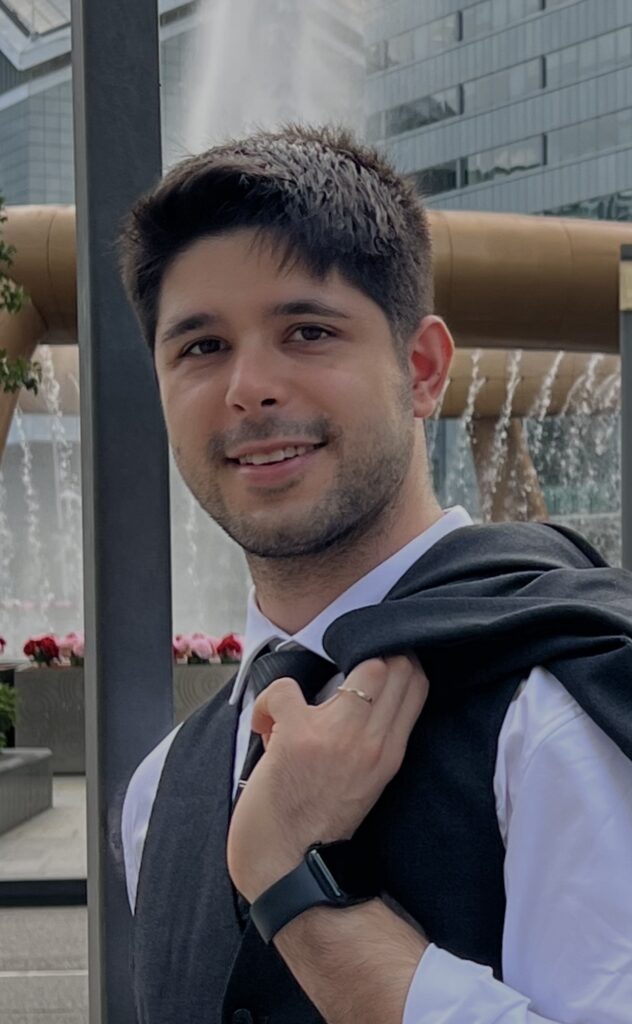

Domenico Pica, GS ’27

Bio: Domenico Pica is a member of the Columbia University School of General Studies Class of 2027, double-majoring in Computer Science and East Asian Languages and Cultures. His research sits at the intersection of Korean history, technology governance, and computing theory. Before Columbia, Dom began his military career in 2013 as a chaplain’s assistant in a Civil Affairs battalion, later serving as a forward observer with the 3rd Ranger Battalion before transitioning back to Civil Affairs. With 13 years and continuing, this military background shaped the analytical perspective of his thesis. After graduation, he intends to pursue graduate study in preparation for a career in cyber policy/posturing advising.

His senior thesis, “Strategic Ambiguity and Technological Vision: Park Chung Hee’s ‘Brain Industry’ Initiative and Korean Computing Development,” written under the supervision of Professor Seong Uk Kim, examines how the Park Chung Hee regime used strategic ambiguity — the deliberate maintenance of dual civilian and military framings — as a governance mechanism for computing and technology development during South Korea’s Fourth Five-Year Economic Development Plan (1977–1981).

Abstract: This thesis examines how Park Chung Hee’s regime employed strategic ambiguity—the deliberate maintenance of dual civilian and military framings—as a governance mechanism for computing and technology development during South Korea’s Fourth Five-Year Economic Development Plan (1977-1981). Drawing on declassified CIA intelligence assessments from 1983–1984, official Korean planning documents, the published scholarship of Kim Hyung-A and Peter Banseok Kwon, and personal correspondence with Kwon, I argue that the consistent civilian framing of the “brain industry” (두뇌산업) initiative was not accidental or merely rhetorical but constituted a deliberate policy design.

By maintaining workforce development language around what was, in practice, a dual use technology program with defense implications, the regime secured chaebol participation, avoided provoking scrutiny from the United States and Japan, the primary sources of essential technology transfers, and preserved flexibility for a developmental state navigating the tensions between economic growth and national defense after the Nixon Doctrine. Analyzing official documents, worker testimonies, and state-corporate relations, I show that strategic ambiguity operated not as concealment but as a layered system in which different actors—elite planners, factory workers, chaebol executives, and foreign partners—each encountered a version of the truth that was genuine but partial, sufficient to motivate participation without requiring any single actor to acknowledge the program’s full duality.

Grounded in Alan Turing’s insight that digital computing is inherently a universal technology, incapable of being cleanly divided into civilian and military categories, this thesis offers a historical case study with direct relevance to contemporary debates over dual-use technology governance, semiconductor export controls, and the monitoring of emerging technologies in states.
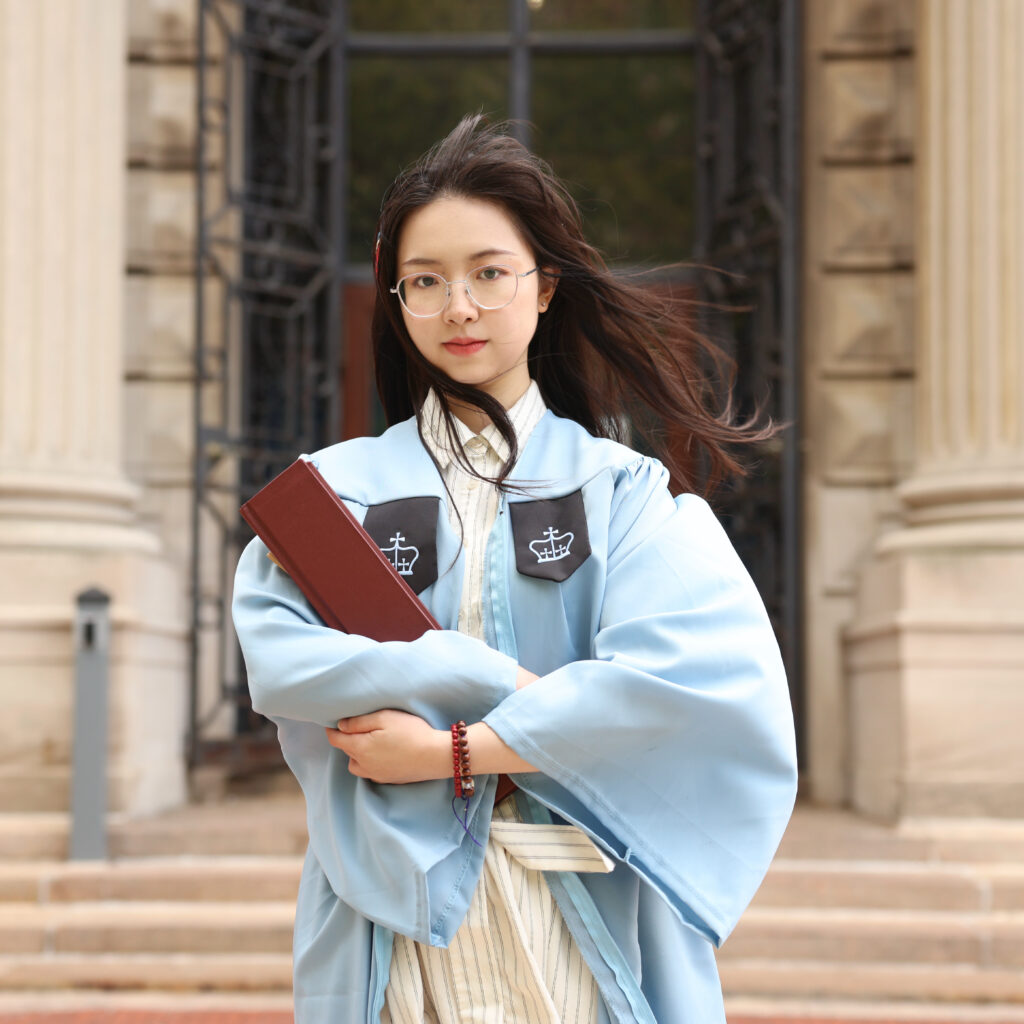

Yuhan Zhang, GS’26

Bio: Yuhan is in the Dual BA program between Columbia University (BA of Art) and City University of Hong Kong (BA of Social Science), majoring in East Asian Studies in both institutions. Born and raised in Yunnan, she has long been drawn to the cultural, linguistic, and religious worlds that are both diverse and interconnected across the multiethnic regions of the plateaus. Near these layered plateau lifeworlds and landscapes, she became particularly interested in Tibetan cultural forms in both historical and contemporary contexts, especially visual culture, performance, ritual, and the ways aesthetics are represented, transformed, and mediated across different political and social settings. Her senior thesis, Aesthetics in the Television Tibetan Losar Galas (2003–2025) and Their Alignment and Negotiation with National Narratives, is developed from her final project for Dr. Lauran R. Hartley’s “Tibet in the World” course, and later expanded the project into a broader study of televised performance, Tibetan aesthetics, and cultural politics. Beyond the classroom, Yuhan creates art inspired by the murals of the Hexi Corridor and everyday life in Yunnan. As she continues into the MA program, she looks forward to deepening her work in Tibetan Studies while keeping her intellectual and artistic practice open, interdisciplinary, and exploratory.

Abstract: On Losar (Tibetan New Year) evening, celebrations unfold in living rooms warmed by guests, chatter, and steaming cups of tea. Television always flickers behind everything: elders drink ston chang and lo chang, children drift in and out of the room, and relatives gather around long sofas covered with rugs as traditional songs play from the TV. The television is not the center of attention, yet it is unmistakably present and will most likely feature the Tibetan Losar Gala (lo gsar gyi mnyam spro’i mtshan tshogs) that repeatedly broadcasts during most holiday hours. Similar to CCTV’s Spring Festival Gala (yangshi chunwan), watching the Losar Gala has become a recognizable ritual in Tibetan New Year celebrations. Being the most widely viewed and culturally influential televised Tibetan language program of the year, it offers a valuable site for examining how Tibetan aesthetics is staged and shaped by television broadcasting and national frameworks. This thesis asks: in what ways do Losar Gala performances diverge from and localize dominant aesthetic and representational frameworks through which national narratives and priorities are conveyed? More specifically, how do songs, colors, and other specific visual and sensory features draw on and negotiate local traditions, artists’ creative efforts, and state-framed representations? And how do these aesthetic choices change or persist across the period from 2003 to 2025? I argue that the Losar Gala should be situated both as a national television ritual and as a performing arts production; it is a space of presenting political significance, national imagination, and social identity, that is directly concerned with mediating ethnic relations and staging cultural diversity. It constructs “Tibetanness” through selective cultural markers, including region-specific Tibetan genres, costumes, props, landscapes, ritual objects, and symbols, such as chemar, khata, Potala palace, etc. They are excerpted, compressed, and rearranged according to the demands of television spectacle or messaging purposes. The Gala displayed local diversity, but ultimately synthesized into a unified image of Tibet as an auspicious, pastoral, sacred, pure, historically grounded, culturally vibrant, and politically harmonious region. It is overall positive, yet it is repeatedly associated with a romanticized imagination of a land of singing and dancing people, purity, hospitality, nature, harmony, and innate cultural expressiveness. From 2003 to 2025, the Gala moved from a relatively simple regional cultural variety show toward a technologically sophisticated aesthetic regime increasingly aligned with national festive aesthetics, especially those of the Chinese Spring Festival. Its aesthetic choices therefore, operate as technologies of affective governance: they make these narratives felt through color, rhythm, choreography, sound, bodies, costumes, and atmosphere. However, the aesthetic production is not just top-down: choreographers, singers, costume designers, ICH bearers, and performers exercise real and active creative agency, and are supported yet bounded within state institutions, policy support, funding structures, television demands, and official frameworks of cultural preservation.
05/01/2026 by Amber Adams

Meet our 2024-25 EALAC Undergraduate Senior Thesis Writers!

Meet our 2024-25 EALAC Undergraduate Senior Thesis Writers!

Please join us in congratulating our undergraduate 2024-25 Senior Thesis writers for all of their hard work and efforts in the Senior Thesis Program! These students did an outstanding job and will receive the Oscar Lee Award for Senior Thesis Writers for their achievements.

Anna Qiang, CC ’25

Bio: Anna Qiang is a member of the Columbia College Class of 2025 majoring in East Asian Studies. Her academic interests focus on modern Chinese history, particularly Shanghai during the Republican period, and the interplay between British and Chinese political and economic systems. Beyond her primary field of study, Anna also enjoys conducting legal research and producing music. After graduation, she aims to leverage her interdisciplinary knowledge to contribute meaningfully in global contexts of business and law.

Anna’s senior thesis, “Examining British Imperialism: The Chinese Bourgeoisie and Nationalist Resistance in Shanghai from 1920–1939,” written under the supervision of Professor Eugenia Lean, explores how the Chinese bourgeoisie navigated economic ties with British imperial powers while fostering nationalist resistance. 

Abstract: This thesis examines the relationship between the Chinese bourgeoisie and the Kuomintang (KMT) in Shanghai from 1920–1939, focusing on the dynamics of British imperialism, Chinese nationalism, and capitalist growth. As Shanghai emerged as an international financial and commercial hub, foreign settlements such as the British-dominated Shanghai International Settlement played an important role in shaping the city’s modernization. This district introduced Western banking systems and governance structures, fostering a complex environment that facilitated the rise of the Chinese bourgeoisie.

This paper argues that the Chinese bourgeoisie, as a rising economic class, navigated their dual role: leveraging commercial ties with the British while aligning with nationalist resistance against imperialism. Through an analysis of primary sources, including British political and economic reports, anti-British propaganda posters, and postcards depicting early 20th-century Shanghai, this thesis examines how the KMT simultaneously relied on and sidelined the bourgeoisie. While the bourgeoisie supported KMT initiatives financially, their exclusion from governance reveals the KMT’s strategy of consolidating state power over capitalist interests. By fostering anti-imperialist sentiment and economic independence, the KMT used its paradoxical relationship with the bourgeoisie to establish a nationalist political order and resist British dominance. 

This research highlights the Chinese bourgeoisie’s pivotal role in reshaping Shanghai’s socio-political fabric, showcasing to scholars new perspectives on modern political identities and the legacy of imperialism in early 20th-century Shanghai. 


Helena Han, BC ’25

Bio: Helena Han is a member of Barnard College’s Class of 2025, majoring in East Asian Studies with a minor in History. Her area of interests is Chosǒn and Ming-Qing history, with a focus on gender, language and material culture. Outside of the classroom, Helena enjoys Japanese and Korean pop music, practicing calligraphy, and cooking. After graduation, she plans to continue her research in Columbia EALAC department, where she hopes to further explore women and cultural history in early modern Korea. 

Helena’s senior thesis, “Divorcing the ‘Defiled’: Brought-Back Women and the Politics of Chastity in Seventeenth-Century Chosǒn,” written under the guidance of Professor Jungwon Kim, examines how the Chosǒn state and elite families marginalized women ransomed from captivity after the Manchu invasions, as part of a broader effort to reconstruct cultural identity following the fall of Ming China.

Abstract: This thesis examines the evolving discourse on chastity, martyrdom, and exclusion in seventeenth-century Chosǒn Korea through the case of brought-back women—those captured during the Manchu invasions and later ransomed back to Chosǒn. While the state glorified chaste women who chose death over dishonor, it increasingly treated brought-back women as morally defiled and unfit for reintegration. I argue that this exclusion was not a natural outgrowth of Neo-Confucianization or chastity ideals, but a historically specific response to Chosǒn’s post-Ming identity crisis. As Chosǒn reimagined itself as the last bastion of Confucian civilization after the Ming collapse, chastity became a symbolic language of cultural purification, and women’s bodies became sites of moral anxiety.

Through close analysis of court petitions, literati writings, familial epitaphs and postwar literature, this study reveals how state, scholar-officials, and elite families strategically mobilized chastity and Confucian rhetoric to construct a moral binary between martyrdom and survival. By tracing the ideological, institutional, and mnemonic mechanisms through which brought-back women were stigmatized and erased, this study not only contributes to the historiography on post-invasion Chosǒn identity formation but also complicates our understanding of gendered commemoration and cultural authority in early modern East Asia.


Ichiro Ng, CC ’25

Bio: Ichiro Ng is a member of the Columbia College Class of 2025 majoring in East Asian Studies. Ichiro’s current areas of interest are Japanese literature, theater, and folklore studies. He is currently writing a thesis on Kyōgen, a form of traditional comic theater. In the future, Ichiro hopes to pursue a career in academia.

Abstract: Kyōgen, which can be literally translated as “wild words,” is a Japanese comic theater form characterized by its slapstick humor, parody, and in many cases lightheartedness. Central to Kyōgen is the mimetic interaction between characters, in which a given character would imitate and repeat the actions or words of another. Such imitation generates much of the humor in Kyōgen, where the humor present in mimetic behavior is underpinned by establishing and dismantling hierarchical relationships between the characters. Examining the mechanism of mimesis in Kyōgen will reveal the theatre form’s depiction of hierarchy and power, and how such structures are negotiated within the plays. This thesis seeks to put forth an argument regarding the general function and role of mimesis in Kyōgen as a theatre form. It will propound the argument that imitation in Kyōgen, in its narrative level, does not necessarily signify mimicry in which the imitator would mock and ridicule the figure being imitated. Rather, imitation on the most general level, functions to render the figure who imitates as a fool and an object of laughter. Such imitation is never perfect; to the extent that it is imitation and not transformation, the act of mimicking is necessarily a failure, which makes the imitating figure a fool to laugh at. Imitation becomes a gateway for the characters of higher positions to bring themselves down to the level of stupidity, which then functions to bring an element of festivity to Kyōgen plays.


Sophie Dodds, CC ’25

Bio: Sophie Dodds is a member of the Columbia College class of 2025, majoring in East Asian Studies with a particular focus on late imperial Chinese literature. Her research interests include reading culture and novel theory. Outside of her studies, Sophie enjoys creative writing, painting, and cats. After graduation, Sophie will return to Columbia to join the EALAC PhD program in the fall, where she will be studying late imperial Chinese literature under the guidance of Professor Shang Wei, who also advised her senior thesis, “The Book in Motion: Reading, Rewriting, and Metanovel in The New Quelling the Demons’ Revolt (1620).” 


Ruby Kaminsky, BC ’25

Bio: Ruby Momo Kaminsky is an East Asian Studies major and member of the Barnard College Class of 2025. During her time at Barnard, she took select courses in the Anthropology Department, which sparked her interest in the larger historical forces that reciprocally shape the structures of society and habitus. In addition to her Japanese and Chinese language studies, Ruby spent her first three years of college studying Italian, which enabled her to study abroad in Bologna, Italy. During her time in Bologna, she became fascinated by the shared cultural emphasis on family values, food, and the domestic roles of women, which she recognized from her time living in Japan. 

Her research focuses on the Second Wave Women’s Liberation Movement of the 1970s (Ūman Ribu), examining its portrayal of domesticity in magazines targeted at Japanese housewives. Under the advisement of Professor Max Moerman, she has written her thesis “Domestic Dame or Capitalist Acclaim? Articulations of a Radical Feminist Movement, an Economic Boom, and a Postwar Mentality Shift in Japanese Periodicals of the 1970s.” In this work, she investigates how the intersection of Japan’s post-war economic boom, a national reconfiguration of identity, and the 1970s women’s liberation movement were reflected in the narratives of media for women’s consumption. After graduating, Ruby plans to pursue her passion for cooking and recipe development, carrying forward the critical thinking and interdisciplinary insights imparted… especially as learned through this thesis writing process!

Abstract: This thesis explores how female autonomy can be gained through domestic practices and, further, how female autonomy is derived from the consumption of domestic depictions in women’s periodicals. In my analysis of Shufu no Tomo (1917-2008) and Fujin Kōron (1916-present) – two long-running magazines that catered to housewives centered on the cultivation of domestic life – I consider how these magazines may have contributed to a sense of liberation. The Ūman Ribu movement (loanwords from ‘Woman’ and ‘Liberation’) was a radical feminist movement (1970) which emphasized the importance of access to birth control, freedom of female sexuality, and the emancipation of women from the role of the mother; it ultimately led to the reconsideration of what was thought to be expected of women. The 1968 and 1970 publications of Shufu no Tomo and Fujin Kōron illustrate the evolution of the homemaker in Japan, specifically focusing on how socio-historical and economic factors shaped the ideal of the Japanese domestic woman. The influence of the American Occupation and its facilitation of the postwar mentality affected the lives of Japanese women, Japanese families, and, in turn, the greater rhetoric circulated in Japanese society. With all of these intricacies in mind, this thesis examines how the characterization of the Japanese woman as “selfless and subservient” (Donald Keene, Fujin Kōron 1968) perpetuated the adherence to gender roles and societal expectations associated with the home. Why might this characterization have felt necessary? How did this remarkably generative era feed off of female domesticity? In analyzing these long-running journals dedicated to domestic audiences, I explore the insights that connote a sense of somewhat restricted agency for Japanese housewives. In these domestic publications, we can see that economic success and the reclamation of national pride were fostered, in part, through the structure of the Japanese family between 1968 and 1970. I aim to illuminate the intersection between domestic media published during a time period informed by the burgeoning aspirations of female liberation. These dynamics were imbued with the transforming social, political, and economic shift of the postwar era. My question remains, how did the nascent feminist consciousness of the 1970s appear in these periodicals for female audiences, and how did the prevalent socio-political discourse materialize within their pages?


04/18/2025 by jp4567


Meet our 2022-23 EALAC Undergraduate Senior Thesis Writers!

Meet our 2022-23 EALAC Undergraduate Senior Thesis Writers!

Please join us in congratulating our undergraduate 2022-23 Senior Thesis writers for all of their hard work and efforts in the Senior Thesis Program! These students did an outstanding job and will receive the Oscar Lee Award for Senior Thesis Writers for their achievements.

Lucas Aramburu, CC ’23

Bio: Lucas Aramburu is a member of the Columbia College class of 2023 majoring in East Asian Studies with a concentration in Business Management. Lucas’ area of interest is Chinese politics, language, and culture, specifically relating to Chinese presence in Latin America. Outside of these interests Lucas also has a passion for psychology, literature, and distance running. 

Abstract: Since 2015, the Colombian government has contracted Chinese State-Owned Enterprises (SOEs) to construct a flurry of public works as part of a national push to modernize the country’s notoriously poor transportation infrastructure. In the background of this exponential increase in Chinese presence in Colombia, there remains a memory of political and environmental conflicts arising from Chinese SOE activity in Colombia’s rich oil industry, resulting in local opposition to Chinese investment in the country. The recent acceptance of Chinese investment in infrastructure, in contrast to poor political perceptions of Chinese SOEs in the country, raises questions surrounding the “learning curve” of Chinese firms abroad: namely, whether there are discernable patterns of Chinese behavior towards social opposition, regulatory hurdles, and political complexity in Colombia.

By examining the history of Chinese involvement in Colombia, this thesis argues that while complex relationships between political and industry conditions make it difficult to identify a uniquely “Chinese” way of doing business, these firms generally adhere to local industry practices. Initial Chinese investments in Colombia were molded by private motivations in the oil sector and met with a receptive Colombian environment that was beholden to poor regulations and social conflicts. In the transportation sector, a new set of challenges was also met with the adoption of industry norms, though a focus on building clientelistic political relationships in Colombia incentivized Chinese firms to be more responsive to social and political challenges.


Tasnim Azman, CC ’23

Bio: Tasnim Azman (she/her) is a member of the Columbia College Class of 2023 majoring in East Asian Studies. Her main area of interest is Japanese history, focusing on Japanese imperialism in Southeast Asia during the Pacific War. She is currently writing her thesis, titled “Resisting the Rising Sun: A decolonized examination of Chinese-Malay Solidarity in the Malayan Communist Party under Japanese Occupation in World War II Malaya,” under the tutelage of Dr. Paul Kreitman. In it, she challenges the now-normative view of race relations during the period — that tensions between ethnic Malays and Chinese in World War II Malaya were indiscriminately rife — by examining the outward role and internal dynamics of the Malayan Communist Party. 


Her academic interests include race and ethnicity, gender studies, and postcolonial theory. In her free time, she can be found playing board games with friends, arranging music, watching Survivor, or singing. After graduating, she intends on pursuing graduate studies in Education to receive teaching certification, hoping to move home to play a role in dismantling educational inequality in Malaysia.

Abstract: This thesis examines how the Malayan Communist Party (MCP) mobilized interethnic solidarity as a tool of resistance against the Imperial Japanese administration’s attempt to divide and rule Malaya during the Pacific War. I argue the aforementioned by analyzing Chinese-Malay relations within the MCP in particular. I do this by investigating the MCP’s motivations for fostering solidarity, the means through which that was achieved, and the significance of certain high-ranking Malay officials in the MCP. Central to this thesis is decolonization theory, which urges a reexamination of race relations in 1940s Malaya. The normative understanding of race relations in Japanese-occupied Malaya is that the local ethnic groups were strictly in opposition to one another. I argue that this interpretation of interethnic tension is informed by British colonialism and the villainization of Communism, and is a result of the political dominance of pro-British Malay elites at the time of independence. Such understanding is also continually perpetuated by both historical scholarship and the modern education system. To push against this colonialized view, I am informed primarily by interviews with prominent Malay leaders of the Malayan People’s Anti-Japanese Army and their memoirs — using secondary sources by Malayan historians to supplement the information gathered.


Cole Gengos, CC ’23

Bio: Cole Gengos is a member of Columbia College’s Class of 2023, majoring in East Asian Languages and Cultures. He has a particular interest in language study and language pedagogy of Japanese, Korean, and Chinese languages. Additionally, he has a deep curiosity for East Asian visual and modern cultural studies with a specific focus on Japan. Outside of the classroom, Cole enjoys a variety of cultural exports including Japanese animation and South Korean pop music. After graduation, Cole will be working in Manhattan at a Japanese bank to continue engaging with Japanese culture and commerce.

Cole’s senior thesis, “False Happiness: Postmodern Crisis in Neon Genesis Evangelion and other Works of Japanese Animated Media of the 1990s,” written in consultation with Professor Takuya Tsunoda, explores the Japanese perspectives on postmodernism as viewed through the lens of various seminal animated projects of the 1990s.

Abstract: The topic of the ‘postmodern’ is a broad and amorphous discourse whose origins can roughly be traced to the first use of the terms “post-industrial” and “Post-Impressionism” in the late 19th and early 20th centuries in the context of the art world. These terms were among the first of the ‘posties’ which sprang up in literary, economic, sociological, and religious discourse most notably gaining widespread attention by the 1960s. By examining social criticism, identity, and various reflective Japanese animated works of the 1990s, this thesis aims to provide a critical analysis of concerns and viewpoints relevant to postmodernism in our present-day society. The writing focuses on the interplay between the rise of consumerism, technology, and the effects on identity, interpersonal experiences, and a broader process of detachment from traditional social structures which have been formative to the historical organization of people as individuals and members of a given society or culture. By examining the ways in which these phenomena shape our values and beliefs, we can gain a deeper understanding of their effects on our lives. This thesis explores how a rejection of fixed identity can lead to both liberation and disorientation. Moreover, it argues that consumer culture can reinforce a narrow and limiting view of identity, emphasizing the acquisition of and identification with merchandise and franchises over other historical means of personal growth and fulfillment. This thesis focuses on popular and culturally significant anime such as Anno Hideaki’s Neon Genesis Evangelion and Chiaki J. Konaka’s Serial Experiments Lain to explore these themes from primarily a Japanese perspective using European philosophy and Japanese social criticism to come to an understanding of the practical challenges and liberties this new worldview poses.


Emma Potts, CC ’23

Bio: Emma Potts belongs to Columbia College’s Class of 2023, double majoring in East Asian languages & cultures and political science. She completed her senior thesis, “Militarized Modernity’s Enduring Scar: the Process of Remasculinization in the Anti-Feminist Movement of Contemporary South Korea,” under the tutelage of Professor Jungwon Kim and Professor Theodore Hughes. She will be interning with the American Foreign Policy Council’s Indo-Pacific Security Program during the summer months before studying abroad at Yonsei University for her final undergraduate semester. Believing herself as a part of an emerging cadre of young Americans preparing to make differences in cross-cultural understanding and eventually foreign policy making, she hopes to pursue a future career in international education, non-profit work or diplomacy.

Abstract: As exhibited through the recent March 2022 presidential election in which both major party candidates employed anti-feminist rhetoric as components of their political platforms, growing anti-feminist sentiment in South Korea is no transient trend among a segment of the younger generation of Korean men. Some may maintain that anti-feminism is merely a byproduct of dissatisfaction with the military conscription system and similarly increasing insecurities in economic prospects inherent to members of a modern capitalist society; however, this paper builds upon previous research and topical scholarship exploring this current issue to ultimately posit that present day anti-feminist sentiment is, in actuality, a manifestation of Korean men’s perceived ineptitude at achieving their derived concept of masculinity. A concept of masculinity that is viewed as historically implicated by an (ongoing) process of regaining agency and status on account of a colonial legacy of emasculinization at the hands of a Japanese colonial force.

This paper argues that South Korean President Park Chung Hee’s regime (1962-1979) characterized by nation-building efforts during the post-colonial epoch termed Militarized Modernity–a modernization project targeting Koreans and their disciplined, able bodies largely focusing on the universal military conscription system and the increase of (economic) productivity in a militaristic manner by the entire citizenry–defined what masculinity should be for Korean men and that achieving such a status would become an ongoing process. This altered version of (post) colonial modernity will be asserted to be the beginning of a “remasculinization” process undergone by Korean men for the purpose of re-establishing their economic and socio-political preeminence within society, and that a failure to complete this equivalent is being channeled into anti-feminism.


James Gasper, CC ’24

Bio: James Gasper is a Marine veteran and a member of the General Studies Columbia College Class of 2024. His main area of interest in the East Asian Studies major is China (specifically in the discipline of Chinese history, religion, and language), including interdisciplinary interests in Buddhism, philosophy, and meditation. James has studied abroad in Taiwan to improve his Chinese language skills and in India for a more well-rounded understanding of Buddhist/meditative practice. James is passionate about exploring and immersing himself within different cultures to dissolve cultural boundaries and foster raw human relationships experientially.  

Abstract: This paper will analyze the relationship between non-dual meditative practices and psychedelic therapy. While the notion of non-dualism can be referenced to many religions, such as Christianity, Hinduism, and even Judaism, this paper will specifically examine the Buddhist notion of non-dualism. The analysis will begin by exploring the concept of non-dualism and how it relates to the Buddhist understanding of ‘emptiness.’ In a thorough examination of non-dualism and emptiness, there will be an organic arrival at the notion of non-attachment. In order to clearly comprehend non-attachment, this paper will discuss working definitions, non-attachment’s practical applicability, and how non-attachment leads one away from suffering – according to Buddhism. This discussion examines how the non-attached state of consciousness cultivates not only healing but also the implications of how this healing state guides an individual to an increase in well-being and adaptive functioning. 

Upon creating a foundational basis for these Buddhist concepts, this paper will begin analyzing the latter half of the relationship, psychedelic therapy. The analysis will identify a common state of mind and consciousness shared in non-dual meditative practices and psychedelic therapy – a state of non-attachment. Though approaching this shared state of consciousness is significantly different in each practice, the intrinsic learning of non-attachment is experienced in both. To support the analysis of a shared state of mind and consciousness, this paper will first approach a neurological perspective to demonstrate how current mind-psychedelic theories signify a physical integration of non-attachment. This paper will then examine patient experiences to draw attention to two points of interest: experiences described by patients as an encounter with the ineffable and implicit learning lessons of the psychedelic journey. The purpose of highlighting these points of interest is to illustrate the similarities shared between Buddhist practices of non-dualism and the psychedelic experience. Following the categorical descriptions of Buddhist concepts and psychedelic therapy, this paper will return to the outlined understanding of non-attachment in order to analyze what one fosters psychologically by remaining in a conscious state of non-attachment. Ultimately, this research approaches an understanding of the non-attached state of consciousness shared between non-dual meditative practices and psychedelic therapy and investigates how this state of non-attachment optimizes the healthy individual’s emotional relationship with oneself and others.


Andrew Ramirez, CC ’23

Bio: Andrew Ramirez is a member of the Columbia College’s Class of 2023, majoring in east Asian Languages and Cultures. His main area of academic interest is modern Korean literature and history, with a focus on affect studies and the interplay between socio-political factors and the psychic state of the individual subject. His thesis investigates how the precarious politico-economic conditions of South Korea following the Asian Financial Crisis of 1997 have had a profound affective consequence on the downwardly-mobile subjects who belong to the fading strata of the lower middle class; namely, the affective state that results in the psyche of the marginalized subject from this economic context is that of boredom. He conducts this investigation through an exploration of early-twenty-first-century works of South Korean literature. After graduation, he will be teaching English to middle and high school students in South Korea as a Fulbright English Teaching Assistant. He extends his sincerest appreciation and thanks to his family, friends, and professors at Columbia for all their encouragement and support across so many years, with special thanks to his thesis advisor, Professor Theodore Hughes. 


Abstract: Resulting from the disadvantaged position of the middle class which came as a result of the neoliberal economic reforms instituted as part of the IMF’s bailout of the South Korean Economy in 1997, boredom has arisen as a significant affective mode of twenty-first-century South Korean literature featuring downwardly-mobile young subjects of the lower middle class. The literary presentations of bored subjects written in the context of late capitalist South Korea demonstrate the marginalized subject’s lack of access to meaningful economic, social, and aesthetic transcendence and, in doing so, comment on the frustrated manifestation of desire in the psyche of the young, middle-class subject. Boredom and its commentary on transcendence and desire implicate an accompanying aesthetic of banality. Banality as an aesthetic and narrative impulse takes as its focus the otherwise-unthought-of factors that constitute one’s everyday life. Presentations of the banal in these works of contemporary Korean fiction draw the reader’s attention, in particular, towards quotidian things (such as a refrigerator, a can of peaches, or cans of peaches). Such (un)aesthetic representations of banal things bring to light the subject’s preoccupation with these things and, in doing so, complicates the consumerist conception of the subject-object relationship by being driven by a muted desire rather than a libidinal one. Ultimately, I argue, boredom and banality in twenty-first-century South Korean literature together present a complicated portrait of the individual subject in South Korea’s late capitalist context, detailing a new view of the relationship between the society, the subject, and the ordinary object.


Alexander Aibel, CC ’23

Bio: Alexander Aibel is a member of the Columbia College Class of 2023, majoring in East Asian Studies with a focus in Chinese. His thesis, “Examining ‘One Piece’ of Folklore: Eiichiro Oda’s Take on Momotaro and other Japanese Myths,” investigates the intersection between the famous manga and anime “One Piece,” and Japanese mythology. Alexander is writing his thesis under the supervision of Professor Takuya Tsunoda. He is passionate about the role manga plays in popular culture, and how manga is more than just a comic.

Alexander is also very interested in film, television, and international politics. After graduation, he plans to work for a think tank investigating the U.S.-China policy, and complete his Masters in East Asia: Regional Studies at Columbia University.

Abstract: For over 20 years, Eiichiro Oda has written One Piece nearly weekly. Oda has maintained an incredible level of readership, as One Piece has grown to be the highest-grossing manga of all time. This paper will examine Oda’s use of Japanese mythology in his manga, and this paper will seek to explain why Oda chooses to use so many mythological references and how these references better our understanding of the One Piece world. There has not been much previous scholarship comparing One Piece– or Wano Kuni, more specifically– to mythology. Much of the current discussion takes place on Reddit and Youtube, and I seek to detail the connections between myth and manga in this thesis in an academic fashion. Oda utilizes old pieces of culture to build upon modern culture and draw out the element of ‘old Japan’ in his Wano Kuni story arc.


Charlie Wallace, CC ’23

Bio: Charlie Wallace is a member of the Columbia College Class of 2023 from Denver, Colorado, double majoring in East Asian languages and Culture and political science. At Columbia Charlie is the current Columbia College Student Body President, a four year tour guide for Undergraduate Admissions, and an editor for the Columbia Political Review. His EALAC thesis, advised by Professor Andrew Nathan, is on tracking the creation of Taiwanese, Chinese, or both identities through the lens of Taiwanese presidential inauguration speeches. Next year, Charlie will be heading to Tsinghua University in Beijing, China as a Schwarzman Scholar. After completing his masters in global affairs at Tsinghua he hopes to return to the US for law school. 


Abstract: My thesis argues that the growth of an independent Taiwanese identity has not been a linear process through the primary lens of Taiwanese presidential inaugural speeches. My thesis looks at how Chiang Kai-shek, Yan Chia-kan, Chiang Ching-Kuo, Lee Teng-hui, Chen Shui-bian, Ma Ying-jeou, and Tsai Ing-wen have changed their descriptions and understanding of the Taiwan’s identity or not as a nation through their inaugural speeches. I contend that this process has not been linear because different presidents have inherited different global and domestic environments that have greatly impacted their autonomy to speak about Taiwan’s identity. This pressure primarily comes from the geo-politics of Washington and Beijing, as well as the domestic situation in Taiwan between the Kuomintang and Democratic Progressive Party.  

I argue that Taiwan is adhering to a more traditional Chinese religious tradition and writing system than Mainland China itself. I provide evidence that this is likely a result of modern Taiwan being the place that the KMT was going to use as a staging point to eventually take back the mainland. Thus, Taiwan has held onto and preserved the Chinese culture of that era, rather than the culture that Mainland China has now. By holding onto more traditionally Chinese aspects than Mainland China Taiwan has been able to play up these differences to begin to build a distinct identity. However, while holding onto “traditionally Chinese culture,” Taiwanese presidents have been elevating Taiwanese indigenous history and language to try to simultaneously disconnect the national identity from the mainland. 


Mercy Campbell, CC ’23

Bio: Mercy Campbell is a member of Columbia College’s Class of 2023 majoring in East Asian Languages and Cultures with a focus on Korean studies. She wrote her senior thesis, “The Threat of Beauty: Bobbed Hair and the Creation of a Modern Femininity in Colonial Korea,” under the guidance of Professor Theodore Hughes. After graduation, Mercy will work for the summer at Breakthrough Cincinnati training high school and college students who aspire to become educators. Then, she is going to South Korea as a Fulbright English Teaching Assistant in elementary schools. Mercy intends to pursue a graduate degree in Korean studies and a career where she can continue to foster intercultural scholarship and community.

Abstract: This paper will analyze women’s bobbed hair in Korea’s colonial period (1910-1945) as a site of individual expression and public discourse that reveals changing societal attitudes towards gender, modernity, and national identity. While bobbed hair was strongly associated with the global phenomenon of the Modern Girl in the interwar years, this paper examines short hair’s specific meaning and development within the Korean colonial and Confucian contexts to explore how and why the Modern Girl appeared in this locality. Specifically, I focus on the creation of new roles and aesthetics of femininity. In order to do so, I trace short hair from Chosŏn dynasty mandates for men to cut their hair, to women’s free choice to cut their hair in the early 20th century, and especially to published written discourse and images of bobbed haired women circulated in the colonial period, focusing on how meaning is assigned and by whom. Although the Modern Girl in Korea is often dismissed as an eroticized, imagined figure compared to the real and radical New Woman, this research complicates that assumption, and I argue that the Modern Girl has roots in the lives of real Korean women and should be recognized as a radical and challenging role for women in her own right.


02/08/2024 by Nicole Roldan

  • Go to page 1
  • Go to page 2
  • Go to Next Page »

Before Footer

EALAC – Columbia University
407 Kent Hall 1140 Amsterdam Ave.
MC 3907  New York, NY 10027
tel:212.854.5027

Footer

  • Facebook
  • Instagram
  • Twitter
  • ABOUT
  • PEOPLE
  • PROGRAMS
  • EVENTS
  • SUPPORT

Copyright © 2026 · Columbia University Department of East Asian Languages and Cultures

Copyright © 2026 · EALAC on Genesis Framework · WordPress · Log in